Trusts and Your Estate Plan
How We Help You Build a Complete Estate Plan
We help you create a comprehensive estate plan tailored to your specific needs, goals, and family situation. Our team works closely with you to develop customized solutions, including wills, trusts, powers of attorney, and health care directives.
Estate planning is not just about documents—it’s about protecting your assets, preserving your legacy, and ensuring your loved ones are cared for with clarity and confidence.
Why Your Estate Plan Should Be Personalized
No two families are the same, and your estate plan should reflect that.
We take the time to understand your priorities, your concerns, and your long-term vision. From there, we design a strategy that protects your assets, maintains your privacy, and ensures your wishes are carried out exactly as intended.

What Is Estate Planning and Why Does It Matter?
Estate planning is the process of preparing for how your assets and responsibilities will be managed during your lifetime and after your death.
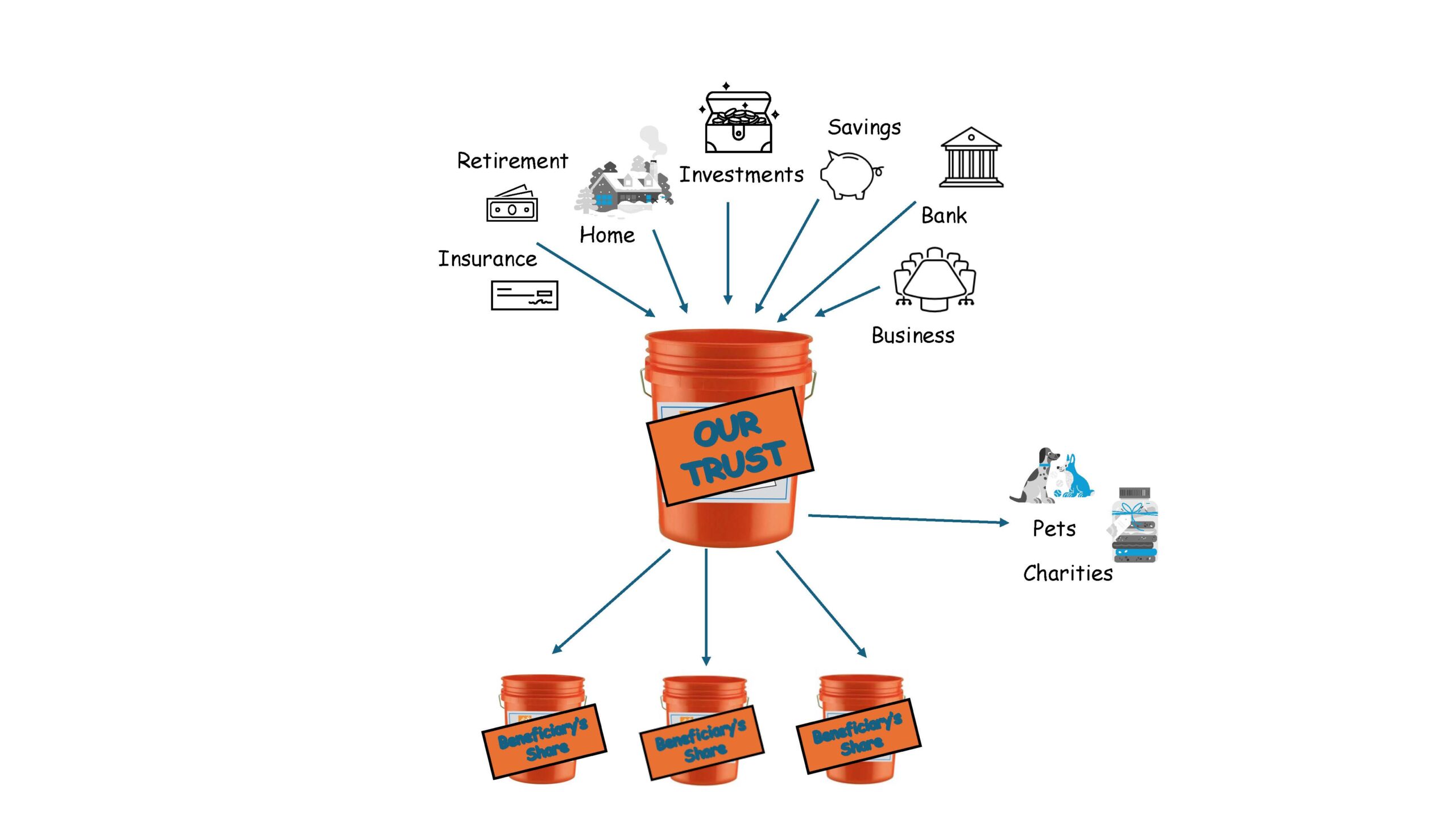
Your estate includes everything you own—your savings, investments, real estate, business interests, personal property, and even provisions for your loved ones and pets.
Without a proper estate plan, the state may decide how your assets are distributed through intestate succession laws, which rarely reflect your true intentions. A well-structured plan ensures that your wishes are honored while minimizing legal complications for your family.
Why Trusts Are Essential in Estate Planning
A trust is one of the most effective tools available to protect your assets and provide clear instructions for the future.
At its core, a trust is a legal arrangement that allows you to place assets into a structured plan—ensuring they are managed and distributed according to your wishes. Think of it as a secure “container” that holds and protects your wealth for your beneficiaries.
Unlike a will, a trust can help avoid the probate process, maintain privacy, and provide greater control over how and when your assets are distributed.
Key Benefits of a Trust
- Avoid Probate: Streamline asset distribution and reduce legal delays
- Maintain Privacy: Keep your financial matters out of public court records
- Protect Beneficiaries: Set conditions to safeguard children or loved ones
- Plan for Incapacity: Ensure your assets are managed if you cannot make decisions
- Minimize Estate Taxes: Preserve more wealth for your family
- Support Special Needs Planning: Protect benefits eligibility for loved ones
- Prepare for Long-Term Care: Help structure assets for Medicaid planning
Are Estate Plans Necessary For Everybody?
Do You Need a Trust or a Will?
A will and a trust serve different but complementary purposes in an estate plan.
A will outlines how your assets should be distributed after your death, but it must go through probate—a public legal process that can be time-consuming and costly.
A trust, on the other hand, allows your assets to bypass probate, offering more privacy, efficiency, and control.
In many cases, the most effective estate plan includes both a will and one or more trusts. An experienced estate planning attorney can help determine the right combination based on your goals.
Types of Trusts We Help You Establish
We design and implement a wide range of trusts to meet different needs and goals, including:
- Revocable Living Trust
- Irrevocable Trust
- Joint Trust
- Spendthrift Trust
- Medicaid Trust
- Special Needs Trust
- Testamentary Trust
- Land Trust
Each type of trust serves a specific purpose, and selecting the right one depends on your financial situation, family structure, and long-term objectives.
When Should You Update Your Estate Plan?
Estate planning is not a one-time event—it should evolve as your life changes.
You should review and update your plan when:
- You get married or divorced
- You have children or grandchildren
- You acquire new assets or a business
- Your financial situation changes
- You move to a new state
Keeping your estate plan up to date ensures it continues to reflect your wishes and protects your family effectively.
Our Proven 5-Step Estate Planning Process
We make the estate planning process simple, clear, and personalized:
- Initial Consultation: We learn about your goals, family, and concerns
- Strategy Development: We design a plan tailored to your needs
- Plan Creation: We prepare all legal documents with precision
- Review & Signing: We guide you through every detail for full clarity
- Ongoing Support: We help you update your plan as life changes
Our goal is not just to create documents, but to give you peace of mind.
Links and Resources

A power of attorney is one of the most important estate planning documents, but when one sibling is named in a power of attorney, there is the potential for disputes with other siblings. No matter which side you are on, it is important to know your rights and limitations. A power of attorney allows someone…
According to court documents, legendary singer Aretha Franklin did not have a will when she died, opening up her estate to public scrutiny and potential problems. Failing to create an estate plan can cause lots of headaches for heirs, in addition to unnecessary costs. Franklin, who died August 16, 2018, at age 76, left behind…
When two or more individuals own property — whether it’s a condominium, a home, or a piece of land — the relationship between the owners is very important. The form of ownership of the property affects how property is transferred to someone else. It is important to make sure you have the right form of…
We all know we are supposed to do estate planning, but not all of us get around to it. So what happens if you don’t have a will when you die? Your estate will be distributed according to state laws, which may or may not be the way you want it to be distributed. Dying…
A California daughter and granddaughter’s fear of losing their home to Medicaid may have contributed to a severe case of elder abuse. If the pair had consulted with an elder law attorney, they might have figured out a way to get their mother the care she needed and also protect their house. Amanda Havens was…
John Oliver recently highlighted problems with the guardianship system on his HBO show, Last Week Tonight with John Oliver. The comedian provided a scary and funny explanation of how guardianship works, ending with a public service announcement by William Shatner, Lily Tomlin and others explaining steps you can take to avoid the guardianship. The show…
A new study has found that people enrolled in a Medicare Advantage plan were more likely to enter a lower-quality nursing home than were people in traditional Medicare. The study raises questions about whether Medicare Advantage plans are influencing beneficiaries’ decision making when it comes to choosing a nursing home. Medicare Advantage plans, an alternative…
If your Medicare drug plan denies coverage for a drug you need, you don’t have to simply accept it. There are several steps you can take to fight the decision. The insurers offering Medicare drug plans choose the medicines — both brand-name and generic — that they will include in a plan’s “formulary,” the roster…
A long-term care policyholder has successfully sued her insurance company for breach of contract after the company raised her premiums. At age 56, Margery Newman bought a long-term care insurance policy from Metropolitan Life Insurance Company. She chose an option called “Reduced-Pay at 65” in which she paid higher premiums until she reached age 65,…
A new federal law is designed to address the growing problem of elder abuse. The law supports efforts to better understand, prevent, and combat both financial and physical elder abuse. The prevalence of elder abuse is hard to calculate because it is underreported, but according to the National Council on Aging, approximately 1 in 10…
Get The Ultimate Life Organizer
Download the free 17 page version by filling out our form below. For a more detailed planning tool, the full 80-page My Life & Legacy Organizer is available for purchase on Amazon.