Trusts and Your Estate Plan
How We Help You Build a Complete Estate Plan
We help you create a comprehensive estate plan tailored to your specific needs, goals, and family situation. Our team works closely with you to develop customized solutions, including wills, trusts, powers of attorney, and health care directives.
Estate planning is not just about documents—it’s about protecting your assets, preserving your legacy, and ensuring your loved ones are cared for with clarity and confidence.
Why Your Estate Plan Should Be Personalized
No two families are the same, and your estate plan should reflect that.
We take the time to understand your priorities, your concerns, and your long-term vision. From there, we design a strategy that protects your assets, maintains your privacy, and ensures your wishes are carried out exactly as intended.

What Is Estate Planning and Why Does It Matter?
Estate planning is the process of preparing for how your assets and responsibilities will be managed during your lifetime and after your death.
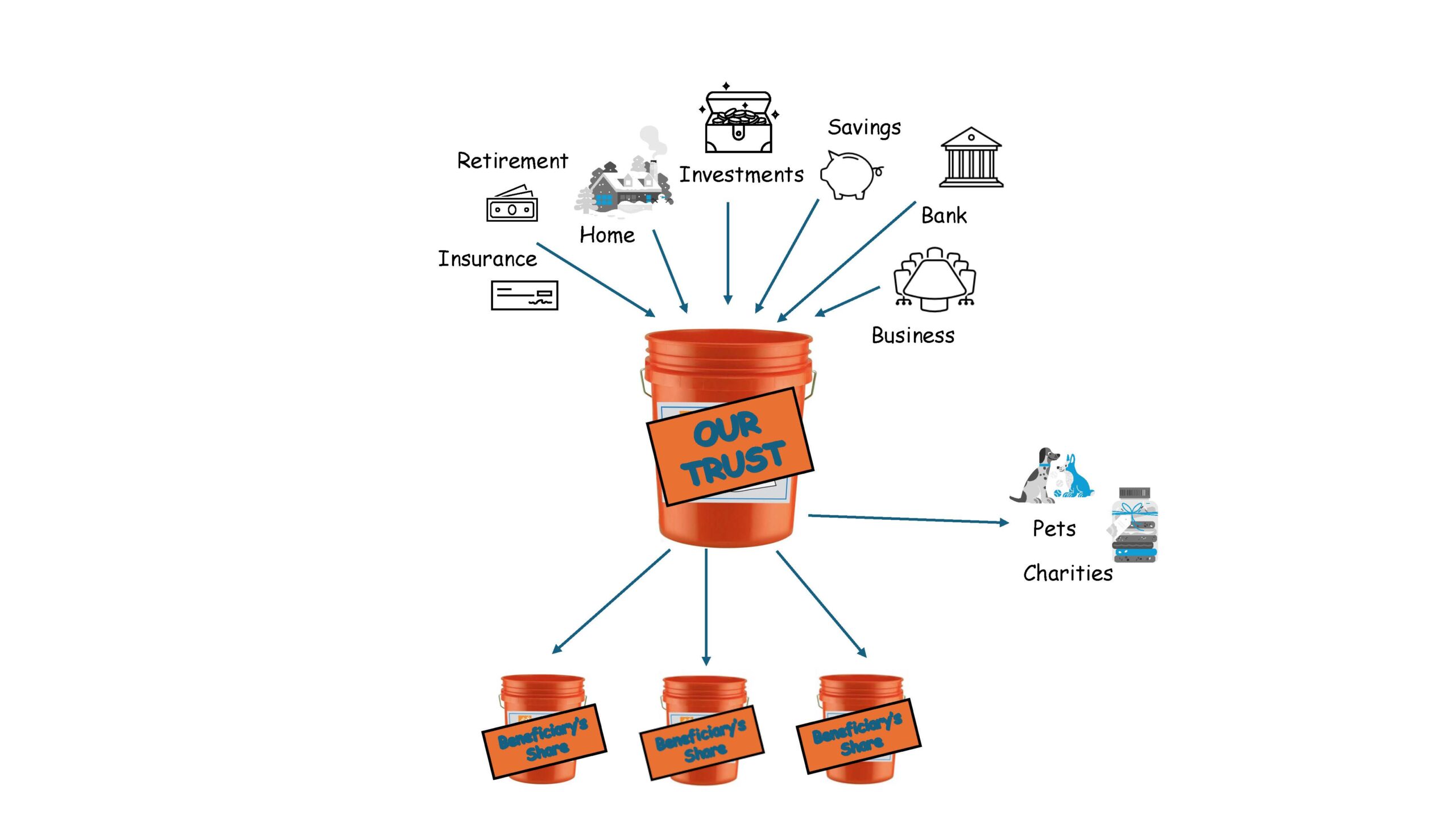
Your estate includes everything you own—your savings, investments, real estate, business interests, personal property, and even provisions for your loved ones and pets.
Without a proper estate plan, the state may decide how your assets are distributed through intestate succession laws, which rarely reflect your true intentions. A well-structured plan ensures that your wishes are honored while minimizing legal complications for your family.
Why Trusts Are Essential in Estate Planning
A trust is one of the most effective tools available to protect your assets and provide clear instructions for the future.
At its core, a trust is a legal arrangement that allows you to place assets into a structured plan—ensuring they are managed and distributed according to your wishes. Think of it as a secure “container” that holds and protects your wealth for your beneficiaries.
Unlike a will, a trust can help avoid the probate process, maintain privacy, and provide greater control over how and when your assets are distributed.
Key Benefits of a Trust
- Avoid Probate: Streamline asset distribution and reduce legal delays
- Maintain Privacy: Keep your financial matters out of public court records
- Protect Beneficiaries: Set conditions to safeguard children or loved ones
- Plan for Incapacity: Ensure your assets are managed if you cannot make decisions
- Minimize Estate Taxes: Preserve more wealth for your family
- Support Special Needs Planning: Protect benefits eligibility for loved ones
- Prepare for Long-Term Care: Help structure assets for Medicaid planning
Are Estate Plans Necessary For Everybody?
Do You Need a Trust or a Will?
A will and a trust serve different but complementary purposes in an estate plan.
A will outlines how your assets should be distributed after your death, but it must go through probate—a public legal process that can be time-consuming and costly.
A trust, on the other hand, allows your assets to bypass probate, offering more privacy, efficiency, and control.
In many cases, the most effective estate plan includes both a will and one or more trusts. An experienced estate planning attorney can help determine the right combination based on your goals.
Types of Trusts We Help You Establish
We design and implement a wide range of trusts to meet different needs and goals, including:
- Revocable Living Trust
- Irrevocable Trust
- Joint Trust
- Spendthrift Trust
- Medicaid Trust
- Special Needs Trust
- Testamentary Trust
- Land Trust
Each type of trust serves a specific purpose, and selecting the right one depends on your financial situation, family structure, and long-term objectives.
When Should You Update Your Estate Plan?
Estate planning is not a one-time event—it should evolve as your life changes.
You should review and update your plan when:
- You get married or divorced
- You have children or grandchildren
- You acquire new assets or a business
- Your financial situation changes
- You move to a new state
Keeping your estate plan up to date ensures it continues to reflect your wishes and protects your family effectively.
Our Proven 5-Step Estate Planning Process
We make the estate planning process simple, clear, and personalized:
- Initial Consultation: We learn about your goals, family, and concerns
- Strategy Development: We design a plan tailored to your needs
- Plan Creation: We prepare all legal documents with precision
- Review & Signing: We guide you through every detail for full clarity
- Ongoing Support: We help you update your plan as life changes
Our goal is not just to create documents, but to give you peace of mind.
Links and Resources

Think back to your life seven years ago. Were the same people in your life? Did you have the same assets? The same accounts? The same family situation? The same wishes? Your estate plan may still be legally valid — but that does not mean it still fits your life. Here are 7 estate planning…

As a teacher, you spend your days caring for students, managing a classroom, and keeping everything moving. With so much on your plate, estate planning can be easy to put off. But estate planning is not just for people with a lot of money. It is about making sure the people you love are protected…

What Families Can Do When Dementia Has Progressed Many families look back and say the same heartbreaking thing: “We thought we had more time.” At first, the signs may have seemed small. Missed appointments. Repeated questions. Bills left unopened. A little confusion here and there. But now things have changed. Your loved one may no…
The Window of Opportunity: Legal Steps to Take When You First Notice Memory Problems
When someone you love starts forgetting familiar names, missing bills, or getting confused in places they know well, it is easy to explain it away—but it may also be time to quietly and lovingly take action. You may have noticed the signs for months. Mom is repeating the same question. Dad missed an appointment he…

Yes — But It Can’t Replace a Real Attorney If you’ve ever asked ChatGPT, Claude, Gemini, or another AI tool a legal-sounding question and received a surprisingly polished answer, you’re not alone. AI can be impressive. It can explain complicated topics in plain English, organize information quickly, and help you feel a little less overwhelmed…
If you’re an adult child with aging parents, you’ve probably had this thought at least once: “If something happened… would I even know what to do?” Not in a spooky, morbid way—more in the real-life way. Like: Where are the documents? Who do I call? What needs to happen first? Good news: you don’t need…

Estate Planning Isn’t Just About Death—Here’s Why Disability is often treated as a remote possibility, something that happens to other people. Yet one of the most persistent blind spots in planning conversations is disability risk. Comprehensive estate planning is not solely focused around death; it is also about preserving autonomy during life, including through any…

Every holiday season, there’s at least one gift that quietly ends up in the closet… or the re-gift pile. Maybe it’s the sweater that itches, the kitchen gadget you’ll never use, or the office White Elephant disaster that keeps resurfacing. National Regifting Day (the Thursday before Christmas) is a lighthearted reminder that sometimes it’s okay…

Holiday Fun Facts (That Double as Estate Planning Conversation Starters) Picture this: the house is decorated, the food is in the oven, and the family is finally under one roof. It’s the perfect time for… an argument about who gets Grandma’s china. Let’s avoid that. You don’t have to bring up wills and trusts over…

Business Owner Retirement: Employee-Based Succession Planning: MBOs and ESOPs Explained After years of pouring your energy, passion, and grit into building a successful business, the idea of handing over the reins can feel both thrilling and a little nerve-racking. But what if your exit strategy could reward the very people who helped you get here?…
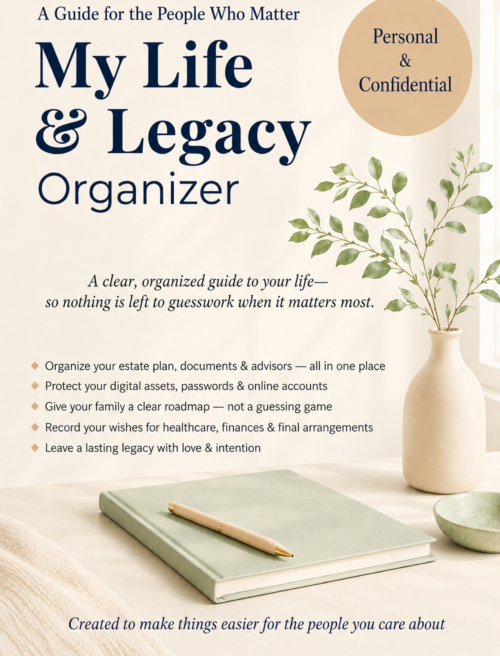
Get The Ultimate Life Organizer
Download the free 17 page version by filling out our form below. For a more detailed planning tool, the full 80-page My Life & Legacy Organizer is available for purchase on Amazon.