Trusts and Your Estate Plan
How We Help You Build a Complete Estate Plan
We help you create a comprehensive estate plan tailored to your specific needs, goals, and family situation. Our team works closely with you to develop customized solutions, including wills, trusts, powers of attorney, and health care directives.
Estate planning is not just about documents—it’s about protecting your assets, preserving your legacy, and ensuring your loved ones are cared for with clarity and confidence.
Why Your Estate Plan Should Be Personalized
No two families are the same, and your estate plan should reflect that.
We take the time to understand your priorities, your concerns, and your long-term vision. From there, we design a strategy that protects your assets, maintains your privacy, and ensures your wishes are carried out exactly as intended.

What Is Estate Planning and Why Does It Matter?
Estate planning is the process of preparing for how your assets and responsibilities will be managed during your lifetime and after your death.
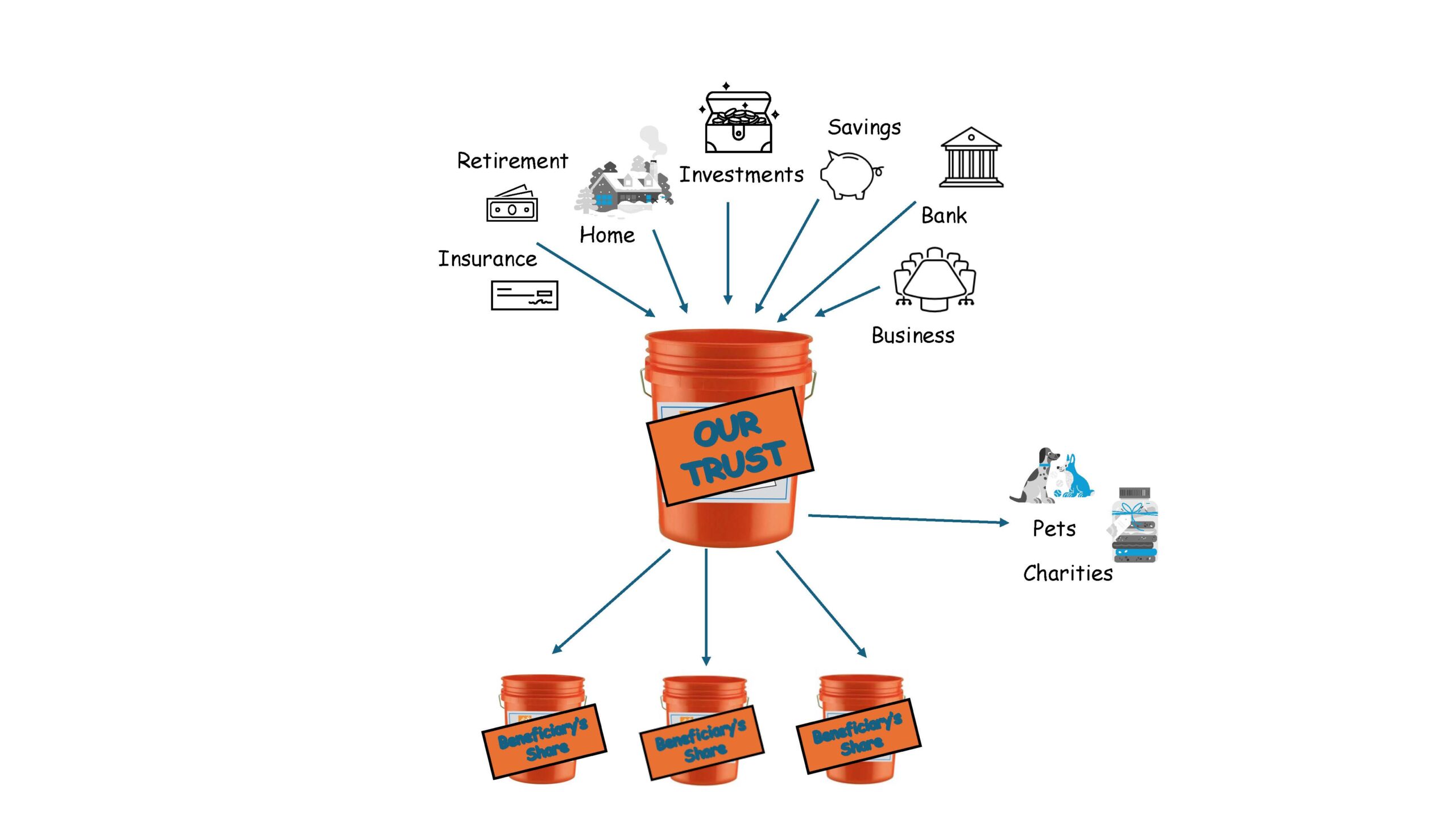
Your estate includes everything you own—your savings, investments, real estate, business interests, personal property, and even provisions for your loved ones and pets.
Without a proper estate plan, the state may decide how your assets are distributed through intestate succession laws, which rarely reflect your true intentions. A well-structured plan ensures that your wishes are honored while minimizing legal complications for your family.
Why Trusts Are Essential in Estate Planning
A trust is one of the most effective tools available to protect your assets and provide clear instructions for the future.
At its core, a trust is a legal arrangement that allows you to place assets into a structured plan—ensuring they are managed and distributed according to your wishes. Think of it as a secure “container” that holds and protects your wealth for your beneficiaries.
Unlike a will, a trust can help avoid the probate process, maintain privacy, and provide greater control over how and when your assets are distributed.
Key Benefits of a Trust
- Avoid Probate: Streamline asset distribution and reduce legal delays
- Maintain Privacy: Keep your financial matters out of public court records
- Protect Beneficiaries: Set conditions to safeguard children or loved ones
- Plan for Incapacity: Ensure your assets are managed if you cannot make decisions
- Minimize Estate Taxes: Preserve more wealth for your family
- Support Special Needs Planning: Protect benefits eligibility for loved ones
- Prepare for Long-Term Care: Help structure assets for Medicaid planning
Are Estate Plans Necessary For Everybody?
Do You Need a Trust or a Will?
A will and a trust serve different but complementary purposes in an estate plan.
A will outlines how your assets should be distributed after your death, but it must go through probate—a public legal process that can be time-consuming and costly.
A trust, on the other hand, allows your assets to bypass probate, offering more privacy, efficiency, and control.
In many cases, the most effective estate plan includes both a will and one or more trusts. An experienced estate planning attorney can help determine the right combination based on your goals.
Types of Trusts We Help You Establish
We design and implement a wide range of trusts to meet different needs and goals, including:
- Revocable Living Trust
- Irrevocable Trust
- Joint Trust
- Spendthrift Trust
- Medicaid Trust
- Special Needs Trust
- Testamentary Trust
- Land Trust
Each type of trust serves a specific purpose, and selecting the right one depends on your financial situation, family structure, and long-term objectives.
When Should You Update Your Estate Plan?
Estate planning is not a one-time event—it should evolve as your life changes.
You should review and update your plan when:
- You get married or divorced
- You have children or grandchildren
- You acquire new assets or a business
- Your financial situation changes
- You move to a new state
Keeping your estate plan up to date ensures it continues to reflect your wishes and protects your family effectively.
Our Proven 5-Step Estate Planning Process
We make the estate planning process simple, clear, and personalized:
- Initial Consultation: We learn about your goals, family, and concerns
- Strategy Development: We design a plan tailored to your needs
- Plan Creation: We prepare all legal documents with precision
- Review & Signing: We guide you through every detail for full clarity
- Ongoing Support: We help you update your plan as life changes
Our goal is not just to create documents, but to give you peace of mind.
Links and Resources

It is a very good idea to create advance directives in order to plan for the possibility that you may one day be unable to make your own medical decisions. In doing so, there can be confusion about the difference between a living will and a “do-not-resuscitate” order (DNR). While both these documents are advance…
Legendary singer Aretha Franklin was thought to have died without a will, but the recent discovery of handwritten documents in her home is calling that into question. A representative of her estate has asked a Michigan probate court to determine if any of the documents could be considered a valid will. When Franklin died August…
Imagine if tomorrow you were in a car accident or overcome by an illness and unable to communicate… What would your family do? I have sat on the edge of too many hospital and/or rehab beds dealing with distraught family members. You must have someone (with alternates) to call your insurance company, write checks, pay…
So much is being said in the news about dementia that I thought we should discuss why being occasionally forgetful is not such a concern. To the contrary, our memory may not always be so important. A recent article explains how forgetting is actually useful. By forgetting information that is stale, we are enabling ourselves…
Social Security survivor’s benefits provide a safety net to widows and widowers. But to get the most out of the benefit, you need to know the right time to claim. While you can claim survivor’s benefits as early as age 60, if you claim benefits before your full retirement age, your benefits will be permanently…
Medicare covers preventative care services, including an annual wellness visit. But confusing a wellness visit with a physical could be very costly. As part of the Affordable Care Act, Medicare beneficiaries receive a free annual wellness visit. At this visit, your doctor, nurse practitioner or physician assistant will generally do the following: Ask you to…
The number of older Americans with student loan debt – either theirs or someone else’s — is growing. Sadly, learning how to deal with this debt is now a fact of life for many seniors heading into retirement. According to a study by the Consumer Financial Protection Bureau, the number of older borrowers increased by…
Whether it’s an honor or a burden (or both), you have been appointed trustee of a trust. What responsibilities have been thrust upon you? How can you successfully carry them out? Here are nine do’s and one don’t to get you started: Do read the trust document. It sets out the rules under which you…
How frequently you should review your estate plan depends on how old you are and whether there has been a significant change in your circumstances. If you are over age 60 and you haven’t updated your estate plan in many decades, it’s almost certain that you need to update your documents. After that, you should…
How can you make sure your funeral and burial wishes will be carried out after you die? It is important to let your family know your desires and to put them in writing. Just don’t do it in your will. To help your loved ones follow your wishes after you are gone, you can write…
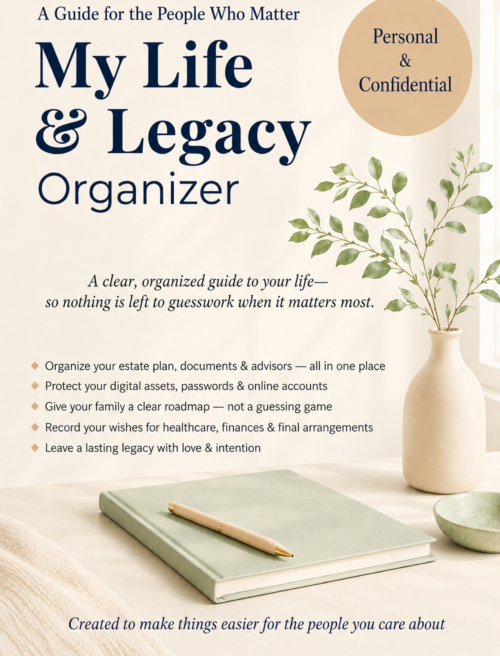
Get The Ultimate Life Organizer
Download the free 17 page version by filling out our form below. For a more detailed planning tool, the full 80-page My Life & Legacy Organizer is available for purchase on Amazon.