Trusts and Your Estate Plan
How We Help You Build a Complete Estate Plan
We help you create a comprehensive estate plan tailored to your specific needs, goals, and family situation. Our team works closely with you to develop customized solutions, including wills, trusts, powers of attorney, and health care directives.
Estate planning is not just about documents—it’s about protecting your assets, preserving your legacy, and ensuring your loved ones are cared for with clarity and confidence.
Why Your Estate Plan Should Be Personalized
No two families are the same, and your estate plan should reflect that.
We take the time to understand your priorities, your concerns, and your long-term vision. From there, we design a strategy that protects your assets, maintains your privacy, and ensures your wishes are carried out exactly as intended.

What Is Estate Planning and Why Does It Matter?
Estate planning is the process of preparing for how your assets and responsibilities will be managed during your lifetime and after your death.
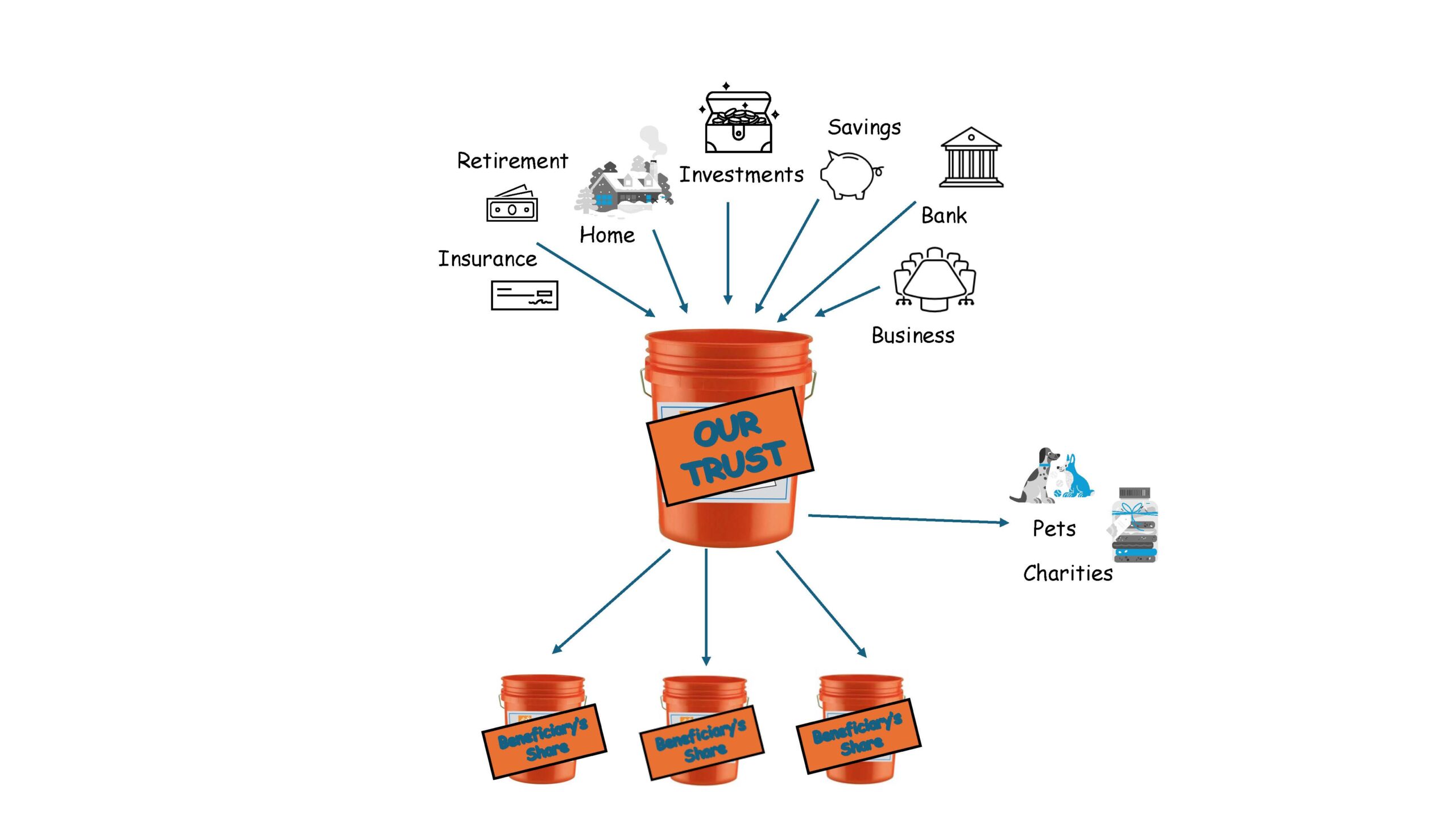
Your estate includes everything you own—your savings, investments, real estate, business interests, personal property, and even provisions for your loved ones and pets.
Without a proper estate plan, the state may decide how your assets are distributed through intestate succession laws, which rarely reflect your true intentions. A well-structured plan ensures that your wishes are honored while minimizing legal complications for your family.
Why Trusts Are Essential in Estate Planning
A trust is one of the most effective tools available to protect your assets and provide clear instructions for the future.
At its core, a trust is a legal arrangement that allows you to place assets into a structured plan—ensuring they are managed and distributed according to your wishes. Think of it as a secure “container” that holds and protects your wealth for your beneficiaries.
Unlike a will, a trust can help avoid the probate process, maintain privacy, and provide greater control over how and when your assets are distributed.
Key Benefits of a Trust
- Avoid Probate: Streamline asset distribution and reduce legal delays
- Maintain Privacy: Keep your financial matters out of public court records
- Protect Beneficiaries: Set conditions to safeguard children or loved ones
- Plan for Incapacity: Ensure your assets are managed if you cannot make decisions
- Minimize Estate Taxes: Preserve more wealth for your family
- Support Special Needs Planning: Protect benefits eligibility for loved ones
- Prepare for Long-Term Care: Help structure assets for Medicaid planning
Are Estate Plans Necessary For Everybody?
Do You Need a Trust or a Will?
A will and a trust serve different but complementary purposes in an estate plan.
A will outlines how your assets should be distributed after your death, but it must go through probate—a public legal process that can be time-consuming and costly.
A trust, on the other hand, allows your assets to bypass probate, offering more privacy, efficiency, and control.
In many cases, the most effective estate plan includes both a will and one or more trusts. An experienced estate planning attorney can help determine the right combination based on your goals.
Types of Trusts We Help You Establish
We design and implement a wide range of trusts to meet different needs and goals, including:
- Revocable Living Trust
- Irrevocable Trust
- Joint Trust
- Spendthrift Trust
- Medicaid Trust
- Special Needs Trust
- Testamentary Trust
- Land Trust
Each type of trust serves a specific purpose, and selecting the right one depends on your financial situation, family structure, and long-term objectives.
When Should You Update Your Estate Plan?
Estate planning is not a one-time event—it should evolve as your life changes.
You should review and update your plan when:
- You get married or divorced
- You have children or grandchildren
- You acquire new assets or a business
- Your financial situation changes
- You move to a new state
Keeping your estate plan up to date ensures it continues to reflect your wishes and protects your family effectively.
Our Proven 5-Step Estate Planning Process
We make the estate planning process simple, clear, and personalized:
- Initial Consultation: We learn about your goals, family, and concerns
- Strategy Development: We design a plan tailored to your needs
- Plan Creation: We prepare all legal documents with precision
- Review & Signing: We guide you through every detail for full clarity
- Ongoing Support: We help you update your plan as life changes
Our goal is not just to create documents, but to give you peace of mind.
Links and Resources

A recent New Jersey appeals court case demonstrates how important it is for families to come up with a long-term care plan before an emergency strikes. The case involves two brothers who got into a fight over whether to place their mother in a nursing home – a dispute that resulted in one brother filing…
Caring for an elderly parent can be stressful for families. Siblings may disagree over how to provide care or where a parent will live, and if these squabbles escalate into a guardianship battle, it can cost the family thousands of dollars. To avoid this, lawyers have begun drafting sibling agreements (also called family care agreements).…
Joy Loverde. Who Will Take Care of Me When I’m Old? Plan Now to Safeguard Your Health and Happiness in Old Age. New York, NY: Da Capo Press, 2017. 313 pages. Click here to order book via IndieBound.org Millions of Americans are facing old age essentially alone. One in three baby boomers is single or…
Older parents are becoming more common, driven in part by changing cultural mores and surrogate motherhood. Comedian and author Steve Martin had his first child at age 67. Singer Billy Joel just welcomed his third daughter. Janet Jackson had a child at age 50. But later-in-life parents have some special estate planning and retirement considerations.…
Preparing to send your son or daughter to college is one of the most exciting, and nerve-wrecking times for a parent! You’ll worry whether they will eat properly, study enough, and get enough sleep. While you can’t help these everyday concerns, you can prepare for the big ones: if your son or daughter has a…
Medicare is supposed to provide up to 35 hours a week of home care to those who qualify, but many Medicare patients with chronic conditions are being wrongly denied such care, according to Kaiser Health News. For a variety of reasons, many home health care agencies are simply telling patients they are not covered. Medicare…
While long-term care insurance costs are up in general, some policies are going down in 2018, according to the 2018 Long Term Care Insurance Price Index, an annual report from the American Association for Long-Term Care Insurance (AALTCI), an industry group. A married couple who are both 60 years old would pay an average of…
A nursing home closure can be traumatic for residents who are forced to move. While there may not be much that can be done to prevent a closure, residents do have some rights. Moving into a nursing home can be a stressful experience on its own. If that nursing home closes, residents can experience symptoms…
Estate planning can be an unsettling process for many people. An estate plan is the strategy you develop at any age, for your life and future, to provide yourself and your family peace of mind, so you can enjoy the years to come worry free. There are a few things that you MUST do to…
While most of the new tax law – the Tax Cuts and Jobs Act — has to do with reducing the corporate tax rate from 35 percent to 21 percent, some provisions relate to individual taxpayers. Before we get into the details, be aware that almost everything listed below sunsets after 2025, with the tax…
Get The Ultimate Life Organizer
Download the free 17 page version by filling out our form below. For a more detailed planning tool, the full 80-page My Life & Legacy Organizer is available for purchase on Amazon.