Trusts and Your Estate Plan
How We Help You Build a Complete Estate Plan
We help you create a comprehensive estate plan tailored to your specific needs, goals, and family situation. Our team works closely with you to develop customized solutions, including wills, trusts, powers of attorney, and health care directives.
Estate planning is not just about documents—it’s about protecting your assets, preserving your legacy, and ensuring your loved ones are cared for with clarity and confidence.
Why Your Estate Plan Should Be Personalized
No two families are the same, and your estate plan should reflect that.
We take the time to understand your priorities, your concerns, and your long-term vision. From there, we design a strategy that protects your assets, maintains your privacy, and ensures your wishes are carried out exactly as intended.

What Is Estate Planning and Why Does It Matter?
Estate planning is the process of preparing for how your assets and responsibilities will be managed during your lifetime and after your death.
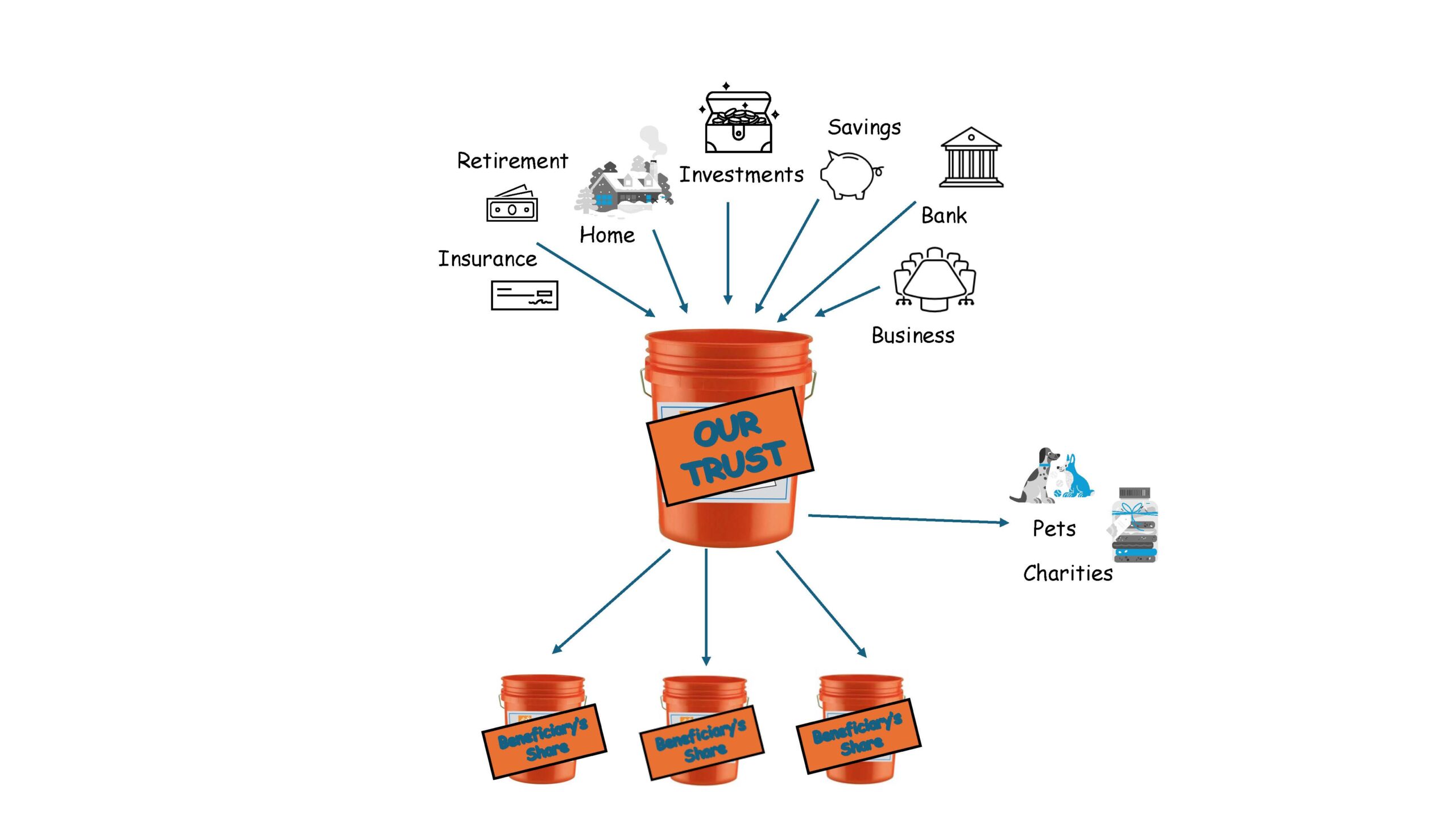
Your estate includes everything you own—your savings, investments, real estate, business interests, personal property, and even provisions for your loved ones and pets.
Without a proper estate plan, the state may decide how your assets are distributed through intestate succession laws, which rarely reflect your true intentions. A well-structured plan ensures that your wishes are honored while minimizing legal complications for your family.
Why Trusts Are Essential in Estate Planning
A trust is one of the most effective tools available to protect your assets and provide clear instructions for the future.
At its core, a trust is a legal arrangement that allows you to place assets into a structured plan—ensuring they are managed and distributed according to your wishes. Think of it as a secure “container” that holds and protects your wealth for your beneficiaries.
Unlike a will, a trust can help avoid the probate process, maintain privacy, and provide greater control over how and when your assets are distributed.
Key Benefits of a Trust
- Avoid Probate: Streamline asset distribution and reduce legal delays
- Maintain Privacy: Keep your financial matters out of public court records
- Protect Beneficiaries: Set conditions to safeguard children or loved ones
- Plan for Incapacity: Ensure your assets are managed if you cannot make decisions
- Minimize Estate Taxes: Preserve more wealth for your family
- Support Special Needs Planning: Protect benefits eligibility for loved ones
- Prepare for Long-Term Care: Help structure assets for Medicaid planning
Are Estate Plans Necessary For Everybody?
Do You Need a Trust or a Will?
A will and a trust serve different but complementary purposes in an estate plan.
A will outlines how your assets should be distributed after your death, but it must go through probate—a public legal process that can be time-consuming and costly.
A trust, on the other hand, allows your assets to bypass probate, offering more privacy, efficiency, and control.
In many cases, the most effective estate plan includes both a will and one or more trusts. An experienced estate planning attorney can help determine the right combination based on your goals.
Types of Trusts We Help You Establish
We design and implement a wide range of trusts to meet different needs and goals, including:
- Revocable Living Trust
- Irrevocable Trust
- Joint Trust
- Spendthrift Trust
- Medicaid Trust
- Special Needs Trust
- Testamentary Trust
- Land Trust
Each type of trust serves a specific purpose, and selecting the right one depends on your financial situation, family structure, and long-term objectives.
When Should You Update Your Estate Plan?
Estate planning is not a one-time event—it should evolve as your life changes.
You should review and update your plan when:
- You get married or divorced
- You have children or grandchildren
- You acquire new assets or a business
- Your financial situation changes
- You move to a new state
Keeping your estate plan up to date ensures it continues to reflect your wishes and protects your family effectively.
Our Proven 5-Step Estate Planning Process
We make the estate planning process simple, clear, and personalized:
- Initial Consultation: We learn about your goals, family, and concerns
- Strategy Development: We design a plan tailored to your needs
- Plan Creation: We prepare all legal documents with precision
- Review & Signing: We guide you through every detail for full clarity
- Ongoing Support: We help you update your plan as life changes
Our goal is not just to create documents, but to give you peace of mind.
Links and Resources

If your child has reached the teenage years, you may already feel as though you are losing control of her life. This is legally true once your child reaches the age of 18 because then the state considers your child to be an adult with the legal right to govern his or her own life.…
The recent tragedy in which ten Florida nursing home residents died when the nursing home lost power during Hurricane Irma is causing government officials to rethink disaster planning. In response to the deaths, Florida Governor Rick Scott announced a new emergency rule, requiring nursing homes and assisted living facilities in the state to have generators…
Prepare for the worst and hope for the best. But follow these steps to make sure you are prepared: If your original, signed documents are not in a safety deposit box try the following safe places to store them. They need to be in a watertight container of some sort and put it up high…
My clients often come to me with a list of assets such as homes, bank and investment accounts that they would like to pass to their heirs. What is usually missing are the personal items that may not be expensive, but are priceless for their sentimental value. It is often these items that will cause…
At only 53 years old, it is hard to believe that superstar and former Wham! Frontman, George Michael, tragically died of natural causes on Christmas Day in 2016. He was found by, Fadi Fawaz, rumored to be his partner, who is now seemingly going to be kicked out of the star’s home. The singer of…
According to a recent New York Times article, fewer than half of American adults (42 percent) have a will. This figure was quoted according to a recent survey published on Caring.com, a website that offers resources for older Americans and their caregivers. The most common excuse given for not having a will was, “I just…
A Minnesota Judge rules that six siblings are the heirs to Prince’s Fortune The music superstar Prince did not have a will! A judge just ruled that his six siblings are heirs to his fortune, but many more people are claiming to be heirs to the legend’s over 25 million-dollar estate. Prince’s assets will not…
Why do I need to hire an attorney to prepare my will? DIY wills are a dime a dozen in these days but can be a huge mistake costing your family and loved ones countless years in court, unnecessary taxes and legal fees. Many DIY wills are not executed properly (with correct notarization and number…
[This article was originally published 8/31/2007] Wills can be powerful instruments, as the will of Leona Helmsley makes clear. The hotelier and real estate mogul became a symbol of 1980s greed and was given the nickname ”the Queen of Mean” after revelations of her tyrannical treatment of employees came to light during her 1988 trial…
If you own property — whether houses, bank accounts, or vehicles — in more than one state, do you need estate planning documents for each state? The answer is probably no, but you need to do some planning if you want to avoid going through probate in each of the states. A lawyer can generally…
Get The Ultimate Life Organizer
Download the free 17 page version by filling out our form below. For a more detailed planning tool, the full 80-page My Life & Legacy Organizer is available for purchase on Amazon.