Trusts and Your Estate Plan
How We Help You Build a Complete Estate Plan
We help you create a comprehensive estate plan tailored to your specific needs, goals, and family situation. Our team works closely with you to develop customized solutions, including wills, trusts, powers of attorney, and health care directives.
Estate planning is not just about documents—it’s about protecting your assets, preserving your legacy, and ensuring your loved ones are cared for with clarity and confidence.
Why Your Estate Plan Should Be Personalized
No two families are the same, and your estate plan should reflect that.
We take the time to understand your priorities, your concerns, and your long-term vision. From there, we design a strategy that protects your assets, maintains your privacy, and ensures your wishes are carried out exactly as intended.

What Is Estate Planning and Why Does It Matter?
Estate planning is the process of preparing for how your assets and responsibilities will be managed during your lifetime and after your death.
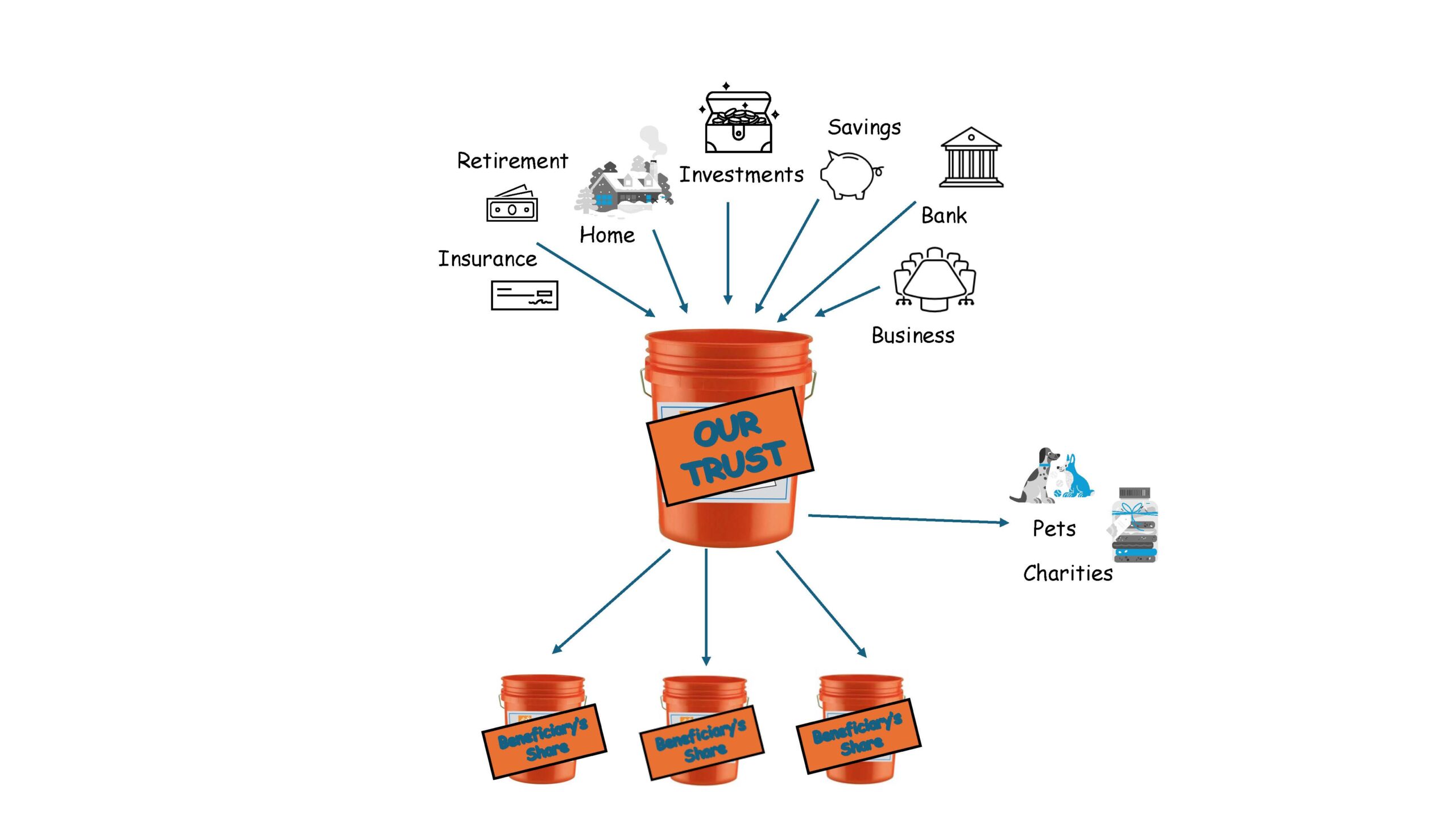
Your estate includes everything you own—your savings, investments, real estate, business interests, personal property, and even provisions for your loved ones and pets.
Without a proper estate plan, the state may decide how your assets are distributed through intestate succession laws, which rarely reflect your true intentions. A well-structured plan ensures that your wishes are honored while minimizing legal complications for your family.
Why Trusts Are Essential in Estate Planning
A trust is one of the most effective tools available to protect your assets and provide clear instructions for the future.
At its core, a trust is a legal arrangement that allows you to place assets into a structured plan—ensuring they are managed and distributed according to your wishes. Think of it as a secure “container” that holds and protects your wealth for your beneficiaries.
Unlike a will, a trust can help avoid the probate process, maintain privacy, and provide greater control over how and when your assets are distributed.
Key Benefits of a Trust
- Avoid Probate: Streamline asset distribution and reduce legal delays
- Maintain Privacy: Keep your financial matters out of public court records
- Protect Beneficiaries: Set conditions to safeguard children or loved ones
- Plan for Incapacity: Ensure your assets are managed if you cannot make decisions
- Minimize Estate Taxes: Preserve more wealth for your family
- Support Special Needs Planning: Protect benefits eligibility for loved ones
- Prepare for Long-Term Care: Help structure assets for Medicaid planning
Are Estate Plans Necessary For Everybody?
Do You Need a Trust or a Will?
A will and a trust serve different but complementary purposes in an estate plan.
A will outlines how your assets should be distributed after your death, but it must go through probate—a public legal process that can be time-consuming and costly.
A trust, on the other hand, allows your assets to bypass probate, offering more privacy, efficiency, and control.
In many cases, the most effective estate plan includes both a will and one or more trusts. An experienced estate planning attorney can help determine the right combination based on your goals.
Types of Trusts We Help You Establish
We design and implement a wide range of trusts to meet different needs and goals, including:
- Revocable Living Trust
- Irrevocable Trust
- Joint Trust
- Spendthrift Trust
- Medicaid Trust
- Special Needs Trust
- Testamentary Trust
- Land Trust
Each type of trust serves a specific purpose, and selecting the right one depends on your financial situation, family structure, and long-term objectives.
When Should You Update Your Estate Plan?
Estate planning is not a one-time event—it should evolve as your life changes.
You should review and update your plan when:
- You get married or divorced
- You have children or grandchildren
- You acquire new assets or a business
- Your financial situation changes
- You move to a new state
Keeping your estate plan up to date ensures it continues to reflect your wishes and protects your family effectively.
Our Proven 5-Step Estate Planning Process
We make the estate planning process simple, clear, and personalized:
- Initial Consultation: We learn about your goals, family, and concerns
- Strategy Development: We design a plan tailored to your needs
- Plan Creation: We prepare all legal documents with precision
- Review & Signing: We guide you through every detail for full clarity
- Ongoing Support: We help you update your plan as life changes
Our goal is not just to create documents, but to give you peace of mind.
Links and Resources

Our friend John has a job at Publix. He has a good job, a comfortable salary, and a nice home. However, John has never thought about what would happen if he lost his job or became ill or injured. One day, John is involved in a car accident and is unable to work for several…

When starting a new marriage, there is much to think about: communication, living conditions, holiday plans, financial stability, and the wedding itself. However, something often overlooked by new spouses is the importance of creating an estate plan. It can be hard to think about what would happen if your spouse became ill, incapacitated, or worse, but an estate plan can ease those difficult times. An estate plan typically includes a will or trust, but the most important documents for a new couple are Health Care Directives and Powers of Attorney.

Here are key lessons from the Lenos’ experience: 1. Spouses Can’t Automatically Step In: Many believe that being married means their spouse can automatically manage their finances or healthcare decisions if they become incapacitated. This isn’t true. After turning 18, no one, not even a spouse, can manage these affairs without prior consent (through estate planning documents) or court involvement.

Although television and movies are entertaining with their conflicts and cliffhangers, Real-life estate administration is less dramatic than Hollywood would have you believe

While finding the time during our busy lives may be challenging, having a well-thought-out and carefully drafted plan to protect our children is essential! Trusts offer a unique opportunity to leave a lasting impact on our children’s lives.

Many folks are not familiar with how estate tax works and whether they would have to pay inheritance taxes. Take my quiz to see how much you know. True or False: Estate or Inheritance Tax in Florida is higher than the national average. False.Thankfully, there is no state inheritance tax in Florida. True or False: If you…

Today, it is common for adults to be in long-term committed relationships but be unmarried. If you have a life partner and are unmarried, it is imperative that you have an estate plan if you want your partner to receive your money or property at your death or if you want them to make financial or medical decisions on your behalf if you are alive but unable to make your own decisions. If you rely on your state’s laws, an unmarried partner will likely receive nothing at your death and will have no authority to make decisions on your behalf.

Ask yourself:
● How well do I understand options to protect my money, property, family, or business if I have a medical emergency, a short- or long-term incapacity, or after death?
● What is my financial situation regarding property, income, or debt?
● Is my family structure complicated?
● Am I undecided about my wishes (how to divide my money and property, when to distribute it, or what to include in an advanced directive)?
● Will my family get along if my will is unclear?
● Will someone inherit before they understand the value of their inheritance?
● What if your adult child is on the brink of divorce, will the soon-to-be ex-spouse receive anything from an inheritance?

Do I want a will or a trust? If you die without a will it is known as dying intestate. While many believe that their close family members “know what they want”, it doesn’t necessarily go your way without a valid will. Instead, their money and property are distributed according to Florida’s intestate succession laws, during a Probate action.
But even if someone is fine with the state-imposed inheritance laws, a beneficiary will be required to go through the expensive and long process called “Probate.”.
The law can only assume what you would want, but it may cause your wishes to go haywire. For instance, imagine you have been in a relationship without a formal marriage certificate for many years and love your partner dearly. If you pass without a will, that partner may not inherit according to intestacy laws.

When your bank account balloons, so might your fan base. Family, old buddies, and even scammers may line up for a share. It’s okay to say no. Still, you might want to give some away to people or charities. Remember, big gifts might mean big taxes. For 2023, you can give away $17,000 without tax or $34,000 with your spouse. For 2024, it’s $18,000, or $36,000 for couples.
Get The Ultimate Life Organizer
Download the free 17 page version by filling out our form below. For a more detailed planning tool, the full 80-page My Life & Legacy Organizer is available for purchase on Amazon.