Trusts and Your Estate Plan
How We Help You Build a Complete Estate Plan
We help you create a comprehensive estate plan tailored to your specific needs, goals, and family situation. Our team works closely with you to develop customized solutions, including wills, trusts, powers of attorney, and health care directives.
Estate planning is not just about documents—it’s about protecting your assets, preserving your legacy, and ensuring your loved ones are cared for with clarity and confidence.
Why Your Estate Plan Should Be Personalized
No two families are the same, and your estate plan should reflect that.
We take the time to understand your priorities, your concerns, and your long-term vision. From there, we design a strategy that protects your assets, maintains your privacy, and ensures your wishes are carried out exactly as intended.

What Is Estate Planning and Why Does It Matter?
Estate planning is the process of preparing for how your assets and responsibilities will be managed during your lifetime and after your death.
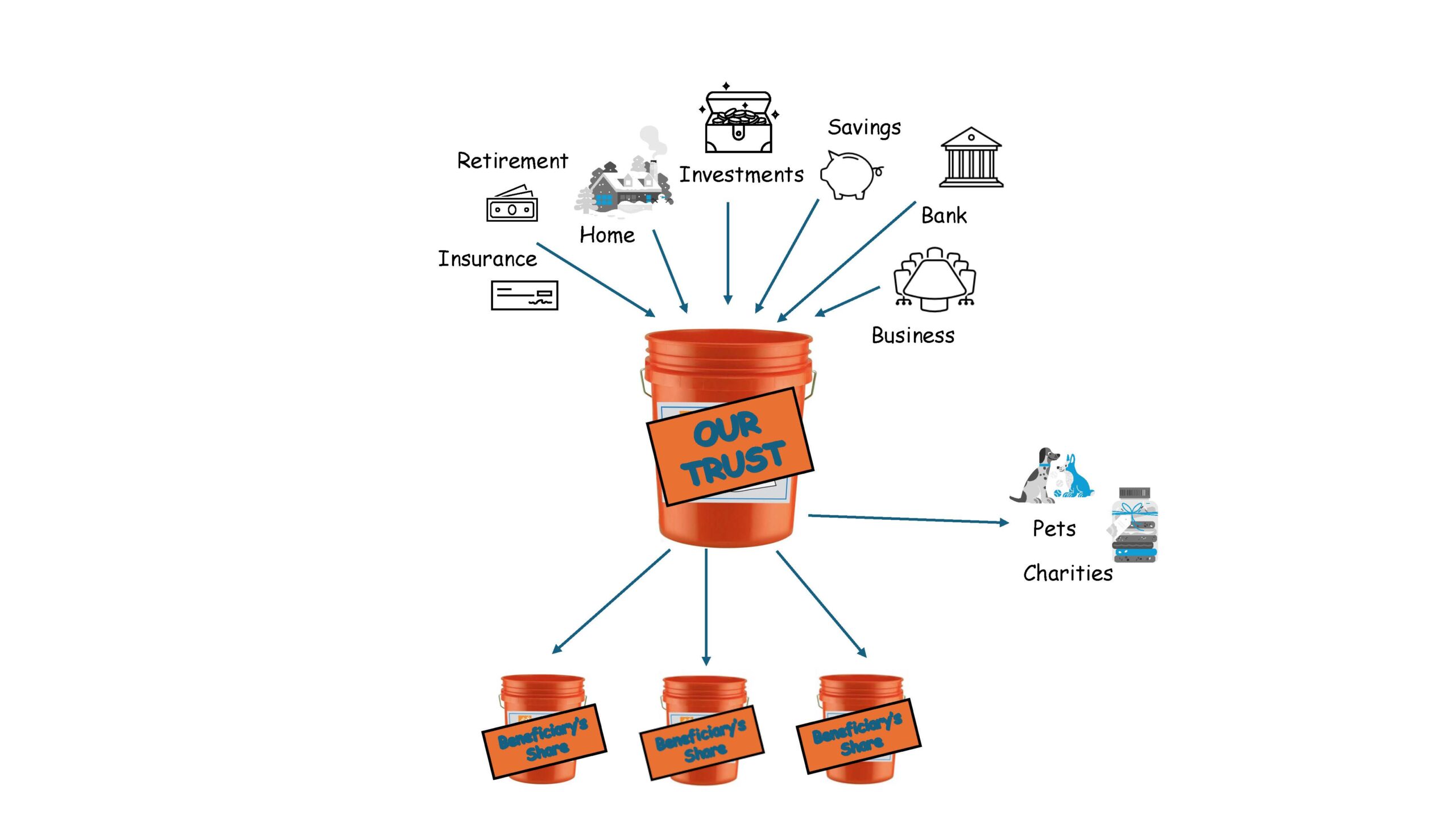
Your estate includes everything you own—your savings, investments, real estate, business interests, personal property, and even provisions for your loved ones and pets.
Without a proper estate plan, the state may decide how your assets are distributed through intestate succession laws, which rarely reflect your true intentions. A well-structured plan ensures that your wishes are honored while minimizing legal complications for your family.
Why Trusts Are Essential in Estate Planning
A trust is one of the most effective tools available to protect your assets and provide clear instructions for the future.
At its core, a trust is a legal arrangement that allows you to place assets into a structured plan—ensuring they are managed and distributed according to your wishes. Think of it as a secure “container” that holds and protects your wealth for your beneficiaries.
Unlike a will, a trust can help avoid the probate process, maintain privacy, and provide greater control over how and when your assets are distributed.
Key Benefits of a Trust
- Avoid Probate: Streamline asset distribution and reduce legal delays
- Maintain Privacy: Keep your financial matters out of public court records
- Protect Beneficiaries: Set conditions to safeguard children or loved ones
- Plan for Incapacity: Ensure your assets are managed if you cannot make decisions
- Minimize Estate Taxes: Preserve more wealth for your family
- Support Special Needs Planning: Protect benefits eligibility for loved ones
- Prepare for Long-Term Care: Help structure assets for Medicaid planning
Are Estate Plans Necessary For Everybody?
Do You Need a Trust or a Will?
A will and a trust serve different but complementary purposes in an estate plan.
A will outlines how your assets should be distributed after your death, but it must go through probate—a public legal process that can be time-consuming and costly.
A trust, on the other hand, allows your assets to bypass probate, offering more privacy, efficiency, and control.
In many cases, the most effective estate plan includes both a will and one or more trusts. An experienced estate planning attorney can help determine the right combination based on your goals.
Types of Trusts We Help You Establish
We design and implement a wide range of trusts to meet different needs and goals, including:
- Revocable Living Trust
- Irrevocable Trust
- Joint Trust
- Spendthrift Trust
- Medicaid Trust
- Special Needs Trust
- Testamentary Trust
- Land Trust
Each type of trust serves a specific purpose, and selecting the right one depends on your financial situation, family structure, and long-term objectives.
When Should You Update Your Estate Plan?
Estate planning is not a one-time event—it should evolve as your life changes.
You should review and update your plan when:
- You get married or divorced
- You have children or grandchildren
- You acquire new assets or a business
- Your financial situation changes
- You move to a new state
Keeping your estate plan up to date ensures it continues to reflect your wishes and protects your family effectively.
Our Proven 5-Step Estate Planning Process
We make the estate planning process simple, clear, and personalized:
- Initial Consultation: We learn about your goals, family, and concerns
- Strategy Development: We design a plan tailored to your needs
- Plan Creation: We prepare all legal documents with precision
- Review & Signing: We guide you through every detail for full clarity
- Ongoing Support: We help you update your plan as life changes
Our goal is not just to create documents, but to give you peace of mind.
Links and Resources

On average, 4 million new businesses are started each year in the United States. Many of those businesses are organized as limited liability companies (LLCs). Combining the benefits of a corporation and a partnership, an LLC protects its members’ personal assets from business liabilities, avoids double taxation, and provides flexibility regarding its operations, management, and…
We are honored to be recognized in Our City Media’s Best of Davie magazine as the best estate planning attorneys in Davie, Cooper City and Southwest Ranches! See what they had to say about us below. “The Attorneys at Andrea L. Jakob, PA have been helping clients and their families prepare for the future for…

What happens to all of our accounts and files when we become incapacitated or pass away? Will our spouses and children have access to them? Where will they find our usernames and passwords? Who can take down our Facebook and LinkedIn pages, or would we prefer that they continue for posterity? And if we’ve saved photos, videos and other files on the cloud, who should have access to them and how long should they stay out there?

Planning an estate may seem overwhelming or challenging, but doesn’t need to be. Estate planning is not just for after your life, but for during your life as well. Estate plans include guidance to your families if you become sick or incapacitated, or even just traveling! Whatever the case may be, using a state-licensed, knowledgeable…

Not all adult children are always treated equally upon their parent’s passing. Quite often I’m asked the question regarding the best way to leave children an unequal inheritance (unequal portions of an estate). It isn’t always a question of an unequal inheritance; sometimes it is a question of what is fair. If you plan to…
If you’re working on your estate plan, one of the most important steps is determining who will be the Personal Representative (Executor) of your estate. It’s an important choice – maybe you’ve read stories of some Personal Representatives behaving badly and wish to avoid that. You don’t want to make a mistake that would cause…
Estate planning is not just for the wealthy, it is something every adult should do. Estate planning can help you accomplish any number of goals, including appointing guardians for minor children, choosing healthcare agents to make decisions for you should you become ill, minimizing taxes so you can pass more wealth onto your family members, and stating how and to whom you would like to pass your estate on to when you pass away.

In Florida, if a person dies without a will, their property will then pass on to their nearest relatives through the Florida intestate laws. These laws outline a strict formula that judges use to distribute the assets of the deceased to their family members. This is done to help avoid a situation where the assets…

A trust is a legal document that can be created during a person’s lifetime and survive upon that person’s death. There are several types of trusts that can be established based upon that person’s needs or the needs of their surviving heirs. Understanding the different types of trusts and their uses may help you determine…

Contrary to popular belief, Estate Planning isn’t about who gets your stuff when you die. Yes, many times we often worry about what will happen to our assets and wonder who will get them. While this question is not fun to think about, it is an essential one to ask yourself at different points…
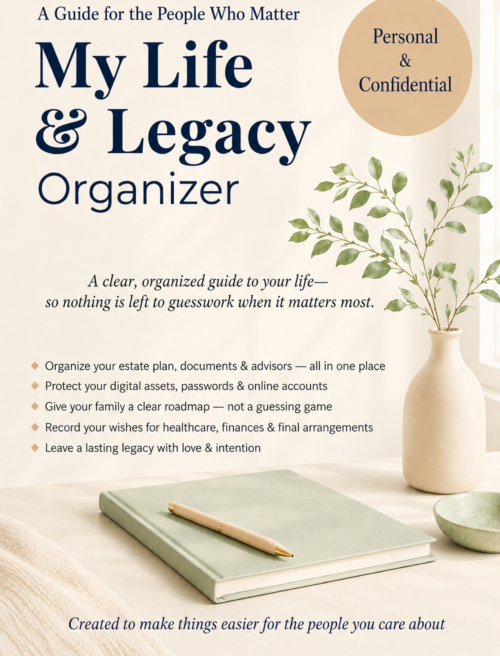
Get The Ultimate Life Organizer
Download the free 17 page version by filling out our form below. For a more detailed planning tool, the full 80-page My Life & Legacy Organizer is available for purchase on Amazon.