Trusts & Estate Planning
How We Can Help
We help create your Trust and comprehensive Estate Planning solutions tailored to your specific needs and goals. Our dedicated team is here to support you in developing personalized Living Wills, Powers of Attorney, Health Care Directives, and robust Trusts and Estate Plans.
You're Unique, So Your Plan Should Be Too.
We listen carefully to what you need. We work closely with you to create a strategy that effectively protects your assets and ensures the future well-being of your family. With our guidance, we can help you develop and maintain family privacy and fulfillment of your your wishes.
Protecting Your Family And Your Future

What is an "Estate Plan"?
You don't need a mansion in Beverly Hills to need an Estate Plan. Your greatest asset is your independence and autonomy. An "Estate Plan" allows us to prepare a variety of documents to make sure the state or county doesn't step in to control your wishes during your lifetime and following your life.
Estate Planning is the planning of your estate for after your life. Your estate includes all of your money (savings, investments, etc.), your life insurance, your house, other real estate, your business, all of your personal property, and even your pets.
By planning what you want to happen to these things before your death, you can guarantee that your life’s work will garner the respect it deserves after your death by having your wishes honored. Your estate plan will also protect you as you get older, making sure you are safe and taken care of. In addition to this, estate planning helps protect your children, family members, and pets amid a hard time, helping them avoid the stress of planning your estate after you are gone.
Our team can help you achieve all that you want to with your legacy and to protect it.
What is a will?
I often describe a will as a “Dear Judge” letter. A will is not self-executing and must go through a legal process called probate. Working with an experienced attorney for a will can help ensure everything is properly prepared. Your Last Will and Testament outlines how you want your affairs handled and how your assets should be distributed, but it only takes effect through the probate process after your death.
What is a Trust?
I hear clients ask “Why do I Need a Trust” every day. A Trust holds your money or property in a special way. It helps you avoid probate and keeps your plans private. It's a strong tool to help you and your family.
Think of a Trust as a "bucket" to hold your assets: take a look at our bucket Why a Trust Matters diagram.
Take a look at my recent Article regarding What to Expect at an "Estate Plan Consultation"
What can our team do for you?
We develop your personalized plan using a variety of documents such as Wills, Trusts, Health Care Directives and Powers of Attorney to meet your individual needs and goals. We help develop the plan to best protects your assets and your family’s future; while maintaining family privacy and keeping control of your wishes.
We discuss what your values are, what your needs are and how your needs and the needs of your family can be protected and represented in your Estate Plan.
Our unique law firm experience is a 5-step proven process you will be 100% thrilled with.
Unlike other firms, we don't just sell documents, we deliver peace of mind. We communicate with you, listen to you, and we treat you with the same care and respect we'd want for our own family.
We have streamlined the estate plan process, so you can spend less time at your lawyer’s office and more time living your life!
The JakobLegal Difference: 5-step process:
1. We Get to Know Each Other
You will be assigned a Client Coordinator who will immediately begin helping you to prepare for your appointment. You will chat with us about your goals, concerns, and your family. We will schedule your signing date so you'll know your goal is in sight.
2. Meet with your Estate Planning Attorney
At your attorney meeting, once our client agreement is signed, we will begin our promised attorney/customer service experience. We will curate the best plan to achieve your goals and ease your concerns at this comprehensive appointment.
3. Personalized Plan Developed
Our team will roll up their sleeves to begin your personalized and detailed plan design. It will be developed and tailored to your exact needs, and the appropriate documents will be drafted.
4. Signing Meeting
At the signing, we'll go over every detail and ensure you fully comprehend your plan. We simplify complex legal jargon, making it accessible to you and your family, so you don't need legal expertise to understand how it benefits you.
5. Life Happens
We are all human and life has its unexpected twists and turns. Our promise to you is we will help you along the way and be here for your family when you need it the most.
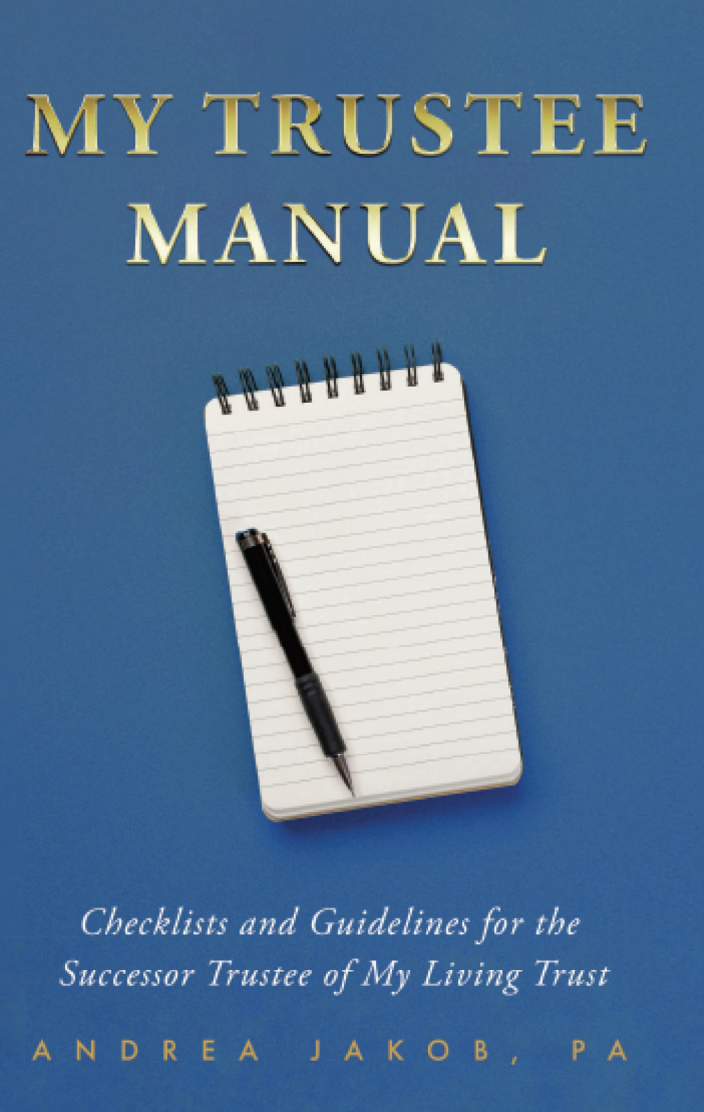
Get "My Trustee Manual" Today
Effective Trusts & Estate Planning Services
A trust may offer you a variety of advantages, such as:
- Avoiding Probate
- Protecting Adult Children from their Potential Mistakes
- Minimizing or Avoiding Tax Consequences
- Keeping Financial Information Private
- Setting Money Aside for Your Children and Grand Children
- Setting Aside Money for Potential Disability or Long-Term Care
- Assisting with Supplemental Needs or Special Needs
- Obtaining Medicaid for yourself or a loved one
Types Of Trusts
- Revocable Living Trust
- Living Trust
- Joint Trust
- Spendthrift Trust
- Irrevocable Trust
- Medicaid Trust
- Land Trust
- Testamentary Trust
Links and Resources

As a teacher, you spend your days caring for students, managing a classroom, and keeping everything moving. With so much on your plate, estate planning can be easy to put off. But estate planning is not just for people with a lot of money. It is about making sure the people you love are protected…

What Families Can Do When Dementia Has Progressed Many families look back and say the same heartbreaking thing: “We thought we had more time.” At first, the signs may have seemed small. Missed appointments. Repeated questions. Bills left unopened. A little confusion here and there. But now things have changed. Your loved one may no…
The Window of Opportunity: Legal Steps to Take When You First Notice Memory Problems
When someone you love starts forgetting familiar names, missing bills, or getting confused in places they know well, it is easy to explain it away—but it may also be time to quietly and lovingly take action. You may have noticed the signs for months. Mom is repeating the same question. Dad missed an appointment he…

Yes — But It Can’t Replace a Real Attorney If you’ve ever asked ChatGPT, Claude, Gemini, or another AI tool a legal-sounding question and received a surprisingly polished answer, you’re not alone. AI can be impressive. It can explain complicated topics in plain English, organize information quickly, and help you feel a little less overwhelmed…

If you’re an adult child with aging parents, you’ve probably had this thought at least once: “If something happened… would I even know what to do?” Not in a spooky, morbid way—more in the real-life way. Like: Where are the documents? Who do I call? What needs to happen first? Good news: you don’t need…

Estate Planning Isn’t Just About Death—Here’s Why Disability is often treated as a remote possibility, something that happens to other people. Yet one of the most persistent blind spots in planning conversations is disability risk. Comprehensive estate planning is not solely focused around death; it is also about preserving autonomy during life, including through any…

Every holiday season, there’s at least one gift that quietly ends up in the closet… or the re-gift pile. Maybe it’s the sweater that itches, the kitchen gadget you’ll never use, or the office White Elephant disaster that keeps resurfacing. National Regifting Day (the Thursday before Christmas) is a lighthearted reminder that sometimes it’s okay…

Holiday Fun Facts (That Double as Estate Planning Conversation Starters) Picture this: the house is decorated, the food is in the oven, and the family is finally under one roof. It’s the perfect time for… an argument about who gets Grandma’s china. Let’s avoid that. You don’t have to bring up wills and trusts over…

Business Owner Retirement: Employee-Based Succession Planning: MBOs and ESOPs Explained After years of pouring your energy, passion, and grit into building a successful business, the idea of handing over the reins can feel both thrilling and a little nerve-racking. But what if your exit strategy could reward the very people who helped you get here?…
Featured September 2025 Article | Our City Weston Magazine Being featured by Our City is a meaningful nod to what matters most here: clear, customized planning. At Andrea L. Jakob, PA, we go beyond documents—designing wills, trusts, powers of attorney, and deeds that protect assets, preserve harmony, and prepare the next generation. Our streamlined process…
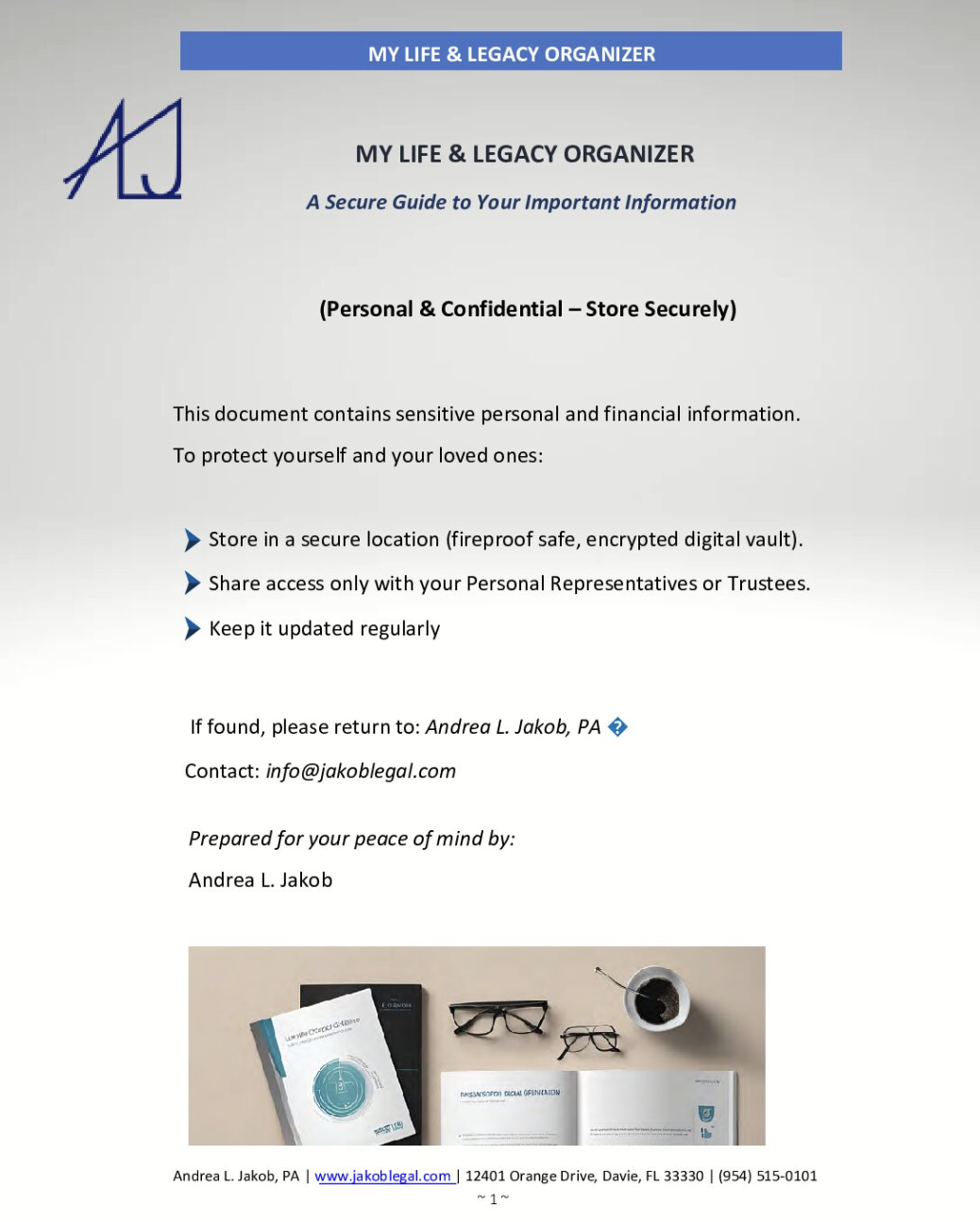
Get The Ultimate Life Organizer
There's a lot to think about when you're collecting information for your estate plan. Download our free 17 page Complete Life Organizer and make sure you have everything covered!