Trusts and Your Estate Plan
How We Help You Build a Complete Estate Plan
We help you create a comprehensive estate plan tailored to your specific needs, goals, and family situation. Our team works closely with you to develop customized solutions, including wills, trusts, powers of attorney, and health care directives.
Estate planning is not just about documents—it’s about protecting your assets, preserving your legacy, and ensuring your loved ones are cared for with clarity and confidence.
Why Your Estate Plan Should Be Personalized
No two families are the same, and your estate plan should reflect that.
We take the time to understand your priorities, your concerns, and your long-term vision. From there, we design a strategy that protects your assets, maintains your privacy, and ensures your wishes are carried out exactly as intended.

What Is Estate Planning and Why Does It Matter?
Estate planning is the process of preparing for how your assets and responsibilities will be managed during your lifetime and after your death.
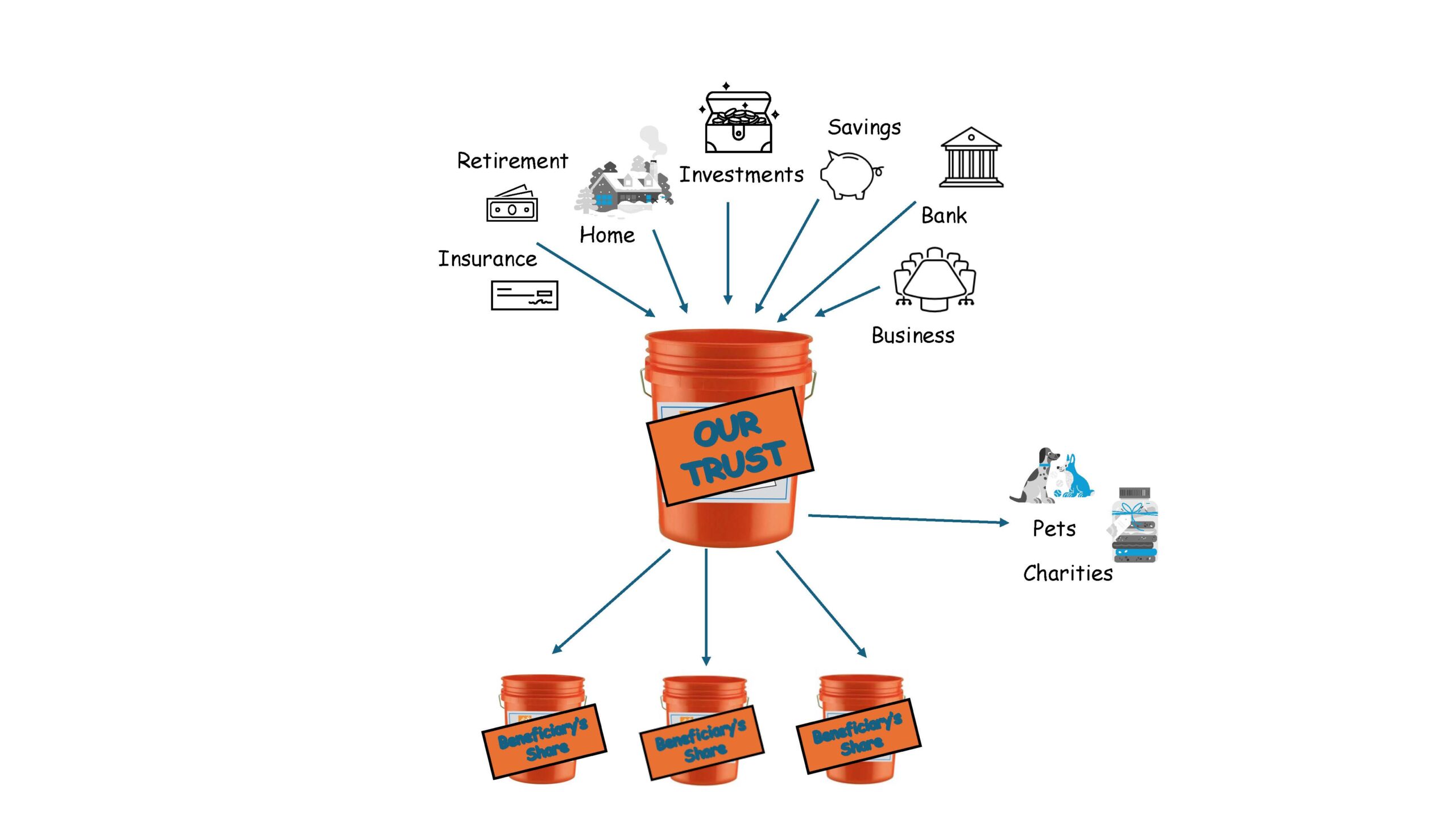
Your estate includes everything you own—your savings, investments, real estate, business interests, personal property, and even provisions for your loved ones and pets.
Without a proper estate plan, the state may decide how your assets are distributed through intestate succession laws, which rarely reflect your true intentions. A well-structured plan ensures that your wishes are honored while minimizing legal complications for your family.
Why Trusts Are Essential in Estate Planning
A trust is one of the most effective tools available to protect your assets and provide clear instructions for the future.
At its core, a trust is a legal arrangement that allows you to place assets into a structured plan—ensuring they are managed and distributed according to your wishes. Think of it as a secure “container” that holds and protects your wealth for your beneficiaries.
Unlike a will, a trust can help avoid the probate process, maintain privacy, and provide greater control over how and when your assets are distributed.
Key Benefits of a Trust
- Avoid Probate: Streamline asset distribution and reduce legal delays
- Maintain Privacy: Keep your financial matters out of public court records
- Protect Beneficiaries: Set conditions to safeguard children or loved ones
- Plan for Incapacity: Ensure your assets are managed if you cannot make decisions
- Minimize Estate Taxes: Preserve more wealth for your family
- Support Special Needs Planning: Protect benefits eligibility for loved ones
- Prepare for Long-Term Care: Help structure assets for Medicaid planning
Are Estate Plans Necessary For Everybody?
Do You Need a Trust or a Will?
A will and a trust serve different but complementary purposes in an estate plan.
A will outlines how your assets should be distributed after your death, but it must go through probate—a public legal process that can be time-consuming and costly.
A trust, on the other hand, allows your assets to bypass probate, offering more privacy, efficiency, and control.
In many cases, the most effective estate plan includes both a will and one or more trusts. An experienced estate planning attorney can help determine the right combination based on your goals.
Types of Trusts We Help You Establish
We design and implement a wide range of trusts to meet different needs and goals, including:
- Revocable Living Trust
- Irrevocable Trust
- Joint Trust
- Spendthrift Trust
- Medicaid Trust
- Special Needs Trust
- Testamentary Trust
- Land Trust
Each type of trust serves a specific purpose, and selecting the right one depends on your financial situation, family structure, and long-term objectives.
When Should You Update Your Estate Plan?
Estate planning is not a one-time event—it should evolve as your life changes.
You should review and update your plan when:
- You get married or divorced
- You have children or grandchildren
- You acquire new assets or a business
- Your financial situation changes
- You move to a new state
Keeping your estate plan up to date ensures it continues to reflect your wishes and protects your family effectively.
Our Proven 5-Step Estate Planning Process
We make the estate planning process simple, clear, and personalized:
- Initial Consultation: We learn about your goals, family, and concerns
- Strategy Development: We design a plan tailored to your needs
- Plan Creation: We prepare all legal documents with precision
- Review & Signing: We guide you through every detail for full clarity
- Ongoing Support: We help you update your plan as life changes
Our goal is not just to create documents, but to give you peace of mind.
Links and Resources

Featured September 2025 Article | Our City Weston Magazine Being featured by Our City is a meaningful nod to what matters most here: clear, customized planning. At Andrea L. Jakob, PA, we go beyond documents—designing wills, trusts, powers of attorney, and deeds that protect assets, preserve harmony, and prepare the next generation. Our streamlined process…

National Stepfamily Day: Planning With Blended Families in Mind (September 16) Happy National Stepfamily Day to everyone who celebrates! With family structures evolving, there’s a good chance you’re part of a step/blended/“bonus” family—or you love someone who is—making September 16 a perfect time to celebrate and to plan. At its heart, this day honors second…

Most people think of probate (the process of collecting, managing, and distributing a deceased person’s money and property) as a private process. However, because probate involves the court system, most filings become a matter of public record. That means your nosy neighbor Nellie can simply go to the courthouse or hop online to learn all…

A Public Life, A Private Death. Private Estate Plan The passing of actor Val Kilmer in April 2025 brings attention to estate planning issues that affect far more than just celebrities. While Kilmer was a public figure, the challenges his estate faced—such as managing real estate in multiple states, handling digital assets, and using charitable…

“You can have an ex-wife, but never an ex-child” George Foreman lived a rags-to-riches tale of pure Americana: Olympic gold medalist, heavyweight boxing champion, ordained minister, global pitchman, and father to a dozen children. Unlike many celebrities, Foreman was considered relatable and connected to his audience. But beyond the fortune and fame, George’s life reminds us…

From Game Shows to Estate Plans: Insights we can Learn from Regis Regis Philbin, the Guinness World Record holder for the most hours on US television, was a familiar face in millions of homes for decades. By the time he retired from his show Live with Regis and Kelly in 2011, he had spent more than 16,740…

Etsy has grown from a small marketplace for handmade goods to a global e-commerce powerhouse, with millions of sellers—many of whom rely on it for income. But while sellers pour their time and creativity into building their shops, few consider what would happen if they could no longer manage their store due to illness, disability,…

As one-child families become increasingly common in the U.S., many parents find themselves facing unique estate planning challenges. While having just one heir can simplify things, it can also create added pressure—both for parents making decisions and for the child who may inherit responsibilities along with assets. Why Only Child Estate Planning Is Different Gone…

Believe it or not, it is not easy to disinherit your spouse in the United States. In many states and the District of Columbia, you cannot intentionally disinherit your spouse unless your spouse agrees to receive nothing from your estate in a prenuptial, postnuptial, or other marital agreement. However, the same is not true for other family…

If your divorce is finalized, congratulations on making it through a tough chapter. But don’t stop there. One more step is crucial—talking to an estate planning attorney. Why? Because even if your divorce decree revokes some roles your ex held (like trustee or power of attorney), many things don’t change automatically. Your ex may still…
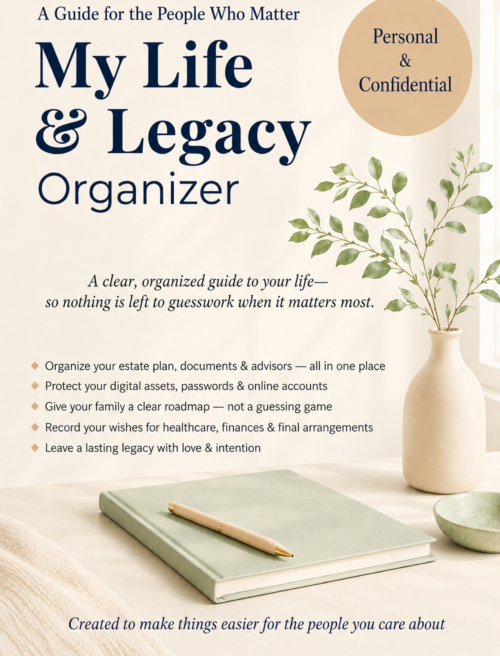
Get The Ultimate Life Organizer
Download the free 17 page version by filling out our form below. For a more detailed planning tool, the full 80-page My Life & Legacy Organizer is available for purchase on Amazon.