When Clutter Becomes an Estate Planning Problem
George Carlin once joked that a house is really just a place to keep your stuff while you go out and get more stuff.
Funny? Yes.
A little too accurate? Also yes.
Most of us have a complicated relationship with our belongings. We save things because they remind us of people we love, places we have been, or seasons of life we do not want to forget. A dining room table may not just be a table. It may be where every holiday dinner happened. A box of old letters may not be clutter. It may be a connection to someone who is gone.
There is nothing wrong with owning things. We work hard, we build homes, and our belongings often tell the story of our lives.
But over time, all that “stuff” can become more than sentimental. It can create stress, take up space, and eventually leave behind a burden for the people we love most.
The estate planning question is not just:
Who gets my money?
It is also:
Who is going to sort through the house?
Who knows where the important papers are?
Who decides what gets kept, sold, donated, or thrown away?
And those questions can be much harder than people expect.
How Clutter Can Complicate an Estate
When someone passes away, their belongings do not simply disappear. Someone has to go through them. That job often falls to a spouse, adult child, trustee, personal representative, or another loved one who is already grieving.
If a home is filled with decades of accumulated belongings, estate administration can become much more difficult.
Clutter and disorganization may lead to:
- Missed assets. Jewelry, cash, titles, account statements, collectibles, or important records may be overlooked or mistaken for junk.
- Delays in probate or trust administration. Sorting, cataloging, valuing, and distributing personal property can add weeks or months to the process.
- Higher costs. Cleanout services, appraisers, junk removal, estate sale companies, storage fees, and auction expenses can add up quickly.
- Real estate delays. A home may not be ready to list for sale until the contents are removed.
- Family conflict. Sentimental items can cause disagreement, even when they have little financial value.
- Safety concerns. Clutter can create fall risks, block exits, and make it harder to safely age at home.
- Missing documents. Wills, trusts, insurance policies, deeds, passwords, and financial records may be buried or hard to locate.
What feels like “just stuff” during life can become a major responsibility after death.
A Few Questions Worth Asking
You do not need to have a perfectly organized home. Life is busy, and homes are meant to be lived in.
But it may be helpful to ask yourself:
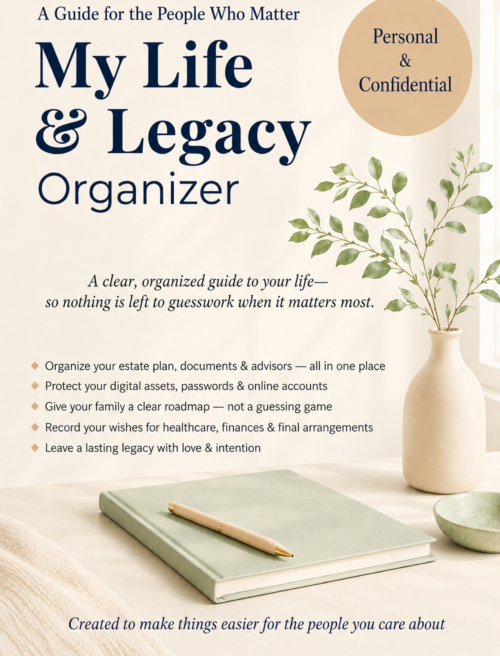
Get The Ultimate Life Organizer
Download the free 21 page version by filling out our form below. For a more detailed planning tool, the full 117-page My Life & Legacy Organizer is available for purchase on Amazon.