Practical Estate Planning Strategies When Letting Go Is Hard
Letting go of belongings can be hard.
After all, our homes are filled with more than furniture, dishes, papers, and keepsakes. They are filled with memories.
That old rocking chair may remind you of your grandmother.
A set of dishes may bring back years of holiday meals.
A box of children’s artwork may feel impossible to throw away.
A collection may represent decades of joy, effort, or personal meaning.
So no, estate planning does not require you to become a minimalist or get rid of everything you love.
But it does ask an important question:
Will my belongings be manageable for the people I leave behind?
Think “Right-Sizing,” Not Downsizing
The goal is not to strip your home of personality or toss out everything that does not have financial value.
A better goal is right-sizing.
Right-sizing means finding a healthy balance between holding on and letting go. It means keeping what matters, organizing what is important, and making sure your loved ones are not left with an overwhelming job later.
You can start by honestly assessing your home.
Level 1: Low
Your home is organized, and important items are easy to find. Clearing or reorganizing would be fairly simple.
Level 2: Moderate
You have accumulated belongings, but the situation is manageable with some planning.
Level 3: Considerable
Belongings are spread across rooms, closets, storage spaces, or multiple locations. Important items may be difficult to locate.
Level 4: High
Clutter affects how parts of the home are used. Sorting everything would likely require significant time or outside help.
Level 5: Critical
The volume of belongings creates safety concerns or would make a cleanout extremely difficult. Professional assistance may be needed.
This is not about judgment. It is about awareness. Once you know where things stand, you can take small, practical steps forward.
Start With a Simple Inventory
You do not need a perfect spreadsheet or a professional catalog.
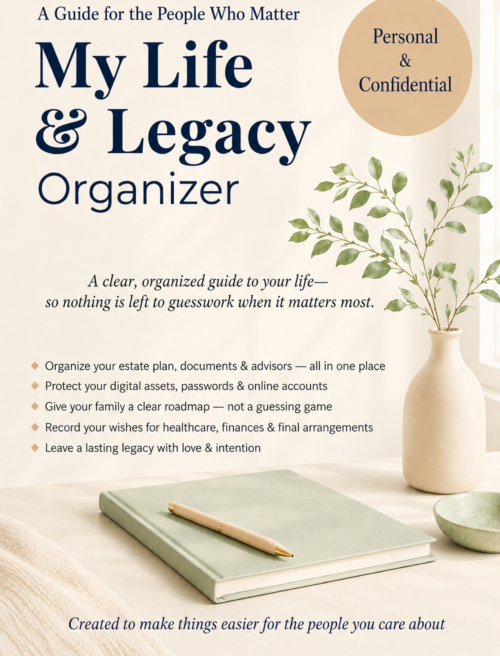
Get The Ultimate Life Organizer
Download the free 21 page version by filling out our form below. For a more detailed planning tool, the full 117-page My Life & Legacy Organizer is available for purchase on Amazon.