What is the Biggest Risk Estate Plans Ignore?
Estate Planning Isn’t Just About Death—Here’s Why
Disability is often treated as a remote possibility, something that happens to other people. Yet one of the most persistent blind spots in planning conversations is disability risk. Comprehensive estate planning is not solely focused around death; it is also about preserving autonomy during life, including through any period of disability.
Disability can arise unexpectedly through illness, injury, or aging, and it can dramatically change a family’s financial and legal situation. Estate planning is not only about passing assets to the next generation; it is also about preserving autonomy and protecting yourself during life.
Disability is often something people assume happens to someone else. Yet one of the biggest gaps in many estate plans is planning for the possibility of incapacity.
The Financial Impact Can Be Huge!
A disability can affect nearly every aspect of life. Households with a disabled working-age adult often need significantly more income to cover additional expenses such as:
- Medical care
- Home modifications
- Equipment
- Transportation
- Personal assistance
At the same time, the household may be dealing with lost income if the disabled individual
cannot work.
Read more to learn why disability planning is one of the most important pieces of a complete estate plan.
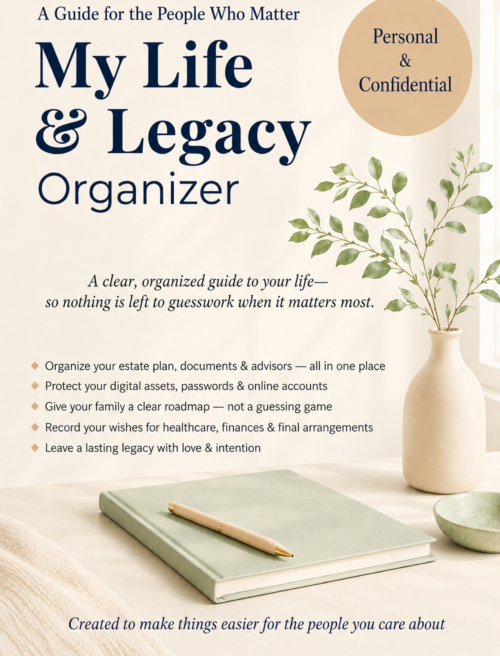
Get The Ultimate Life Organizer
Download the free 17 page version by filling out our form below. For a more detailed planning tool, the full 80-page My Life & Legacy Organizer is available for purchase on Amazon.