National Stepfamily Day: Planning With Blended Families in Mind (September 16)
Happy National Stepfamily Day to everyone who celebrates! With family structures evolving, there’s a good chance you’re part of a step/blended/“bonus” family—or you love someone who is—making September 16 a perfect time to celebrate and to plan.
At its heart, this day honors second chances and the resilience it takes to blend families. Those challenges aren’t only about becoming “one big happy family.” They also show up in the financial and legal details—where careful planning can prevent hurt feelings, delays, and unintended outcomes.
The Evolution of Stepfamilies
The “traditional” two-parents, first-and-only marriage household hasn’t been the dominant model for decades. Higher divorce and remarriage rates and changing social attitudes mean today’s families are wonderfully diverse. Many prefer terms like blended or bonus family to reflect that reality.
But here’s the catch: the law hasn’t evolved as quickly as our language or our lives.
How the Law Treats Stepchildren
You may see no difference between step- and blood relatives, but state law often does—and that can shape what happens to your assets.
- Default rules rarely include stepchildren. If you pass away without a valid will or trust, most state intestacy laws direct your assets to a surviving spouse and to biological or legally adopted children. Stepchildren are usually not included by default.
- Adoption matters. A formal legal adoption typically changes a stepchild’s rights; without it, even decades of parenting may carry little legal weight.
- Unintentional disinheritance happens. A common scenario: assets left outright to a surviving spouse (the children’s biological parent) can be spent, redirected, or left to someone else—leaving stepchildren (and sometimes even your own children) with less than you intended.
If You Want to Include Stepchildren
Many families want stepchildren treated as equals—for reasons of love, fairness, or because stepchildren have limited other support.
Tools & Tips
- Be specific. Use full legal names and clear instructions in your will or trust. Terms like “my children” typically mean biological or adopted children only.
- Use a living trust. Name stepchildren as beneficiaries and set shares and timing of distributions—equal or tailored to your situation.
- Consider QTIP provisions. A QTIP trust can provide for a surviving spouse during life while reserving the remainder for your chosen beneficiaries (including stepchildren).
- Coordinate beneficiaries. Align retirement accounts, life insurance, and POD/TOD designations with your plan—or name your trust where appropriate.
- Make meaningful lifetime gifts. Supporting stepchildren during life for education or milestones can reflect your intent and reduce future friction.
If You Prefer to Exclude (or Manage Indirectly)
Not every blended family is close—and your plan doesn’t have to pretend otherwise.
Tools & Tips
- Say it clearly. If exclusion is your intent, state it in your documents to reduce confusion or conflict.
- Use a living trust. Benefit your spouse and direct the remainder to your biological descendants—while retaining the option to leave a specific gift to a stepchild.
- Guard against the “second spouse” problem. Avoid leaving everything outright to a surviving spouse if your true goal is to protect children from a prior relationship.
- Keep documents current. Update after remarriage, estrangement, reconciliation, births, or major financial changes.
- Consider pre/postnuptial agreements. Set clear expectations about how assets will be divided at death to prevent unintended disinheritance.
The Next Step: Talk It Through—Then Put It in Writing
Blended families can magnify misunderstandings when plans are vague or out of date. Open conversations help, but they can be emotional and complicated. You can tell your lawyer what you might hesitate to say out loud—“We want to treat everyone fairly, but not necessarily equally,” or “My spouse will provide for their children; I want to be sure mine are protected too.” Those discussions stay confidential, and your documents can remain private until needed.
We can help you design a plan that reflects your real family—lovingly, clearly, and on your terms.
If privacy and peace of mind are on your list this year, let’s put a simple, budget-friendly plan in place.
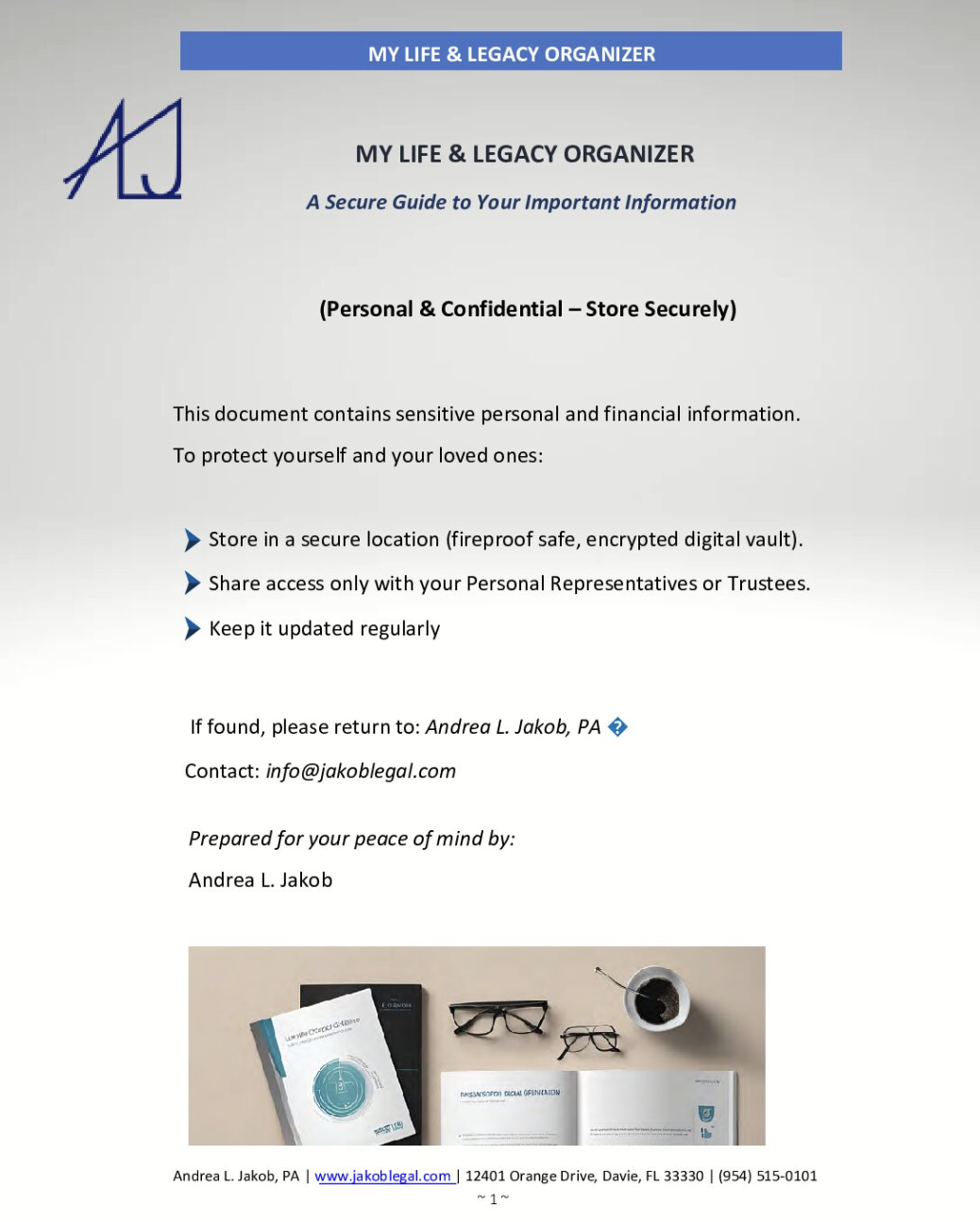
Get The Ultimate Life Organizer
There's a lot to think about when you're collecting information for your estate plan. Download our free 17 page Complete Life Organizer and make sure you have everything covered!